
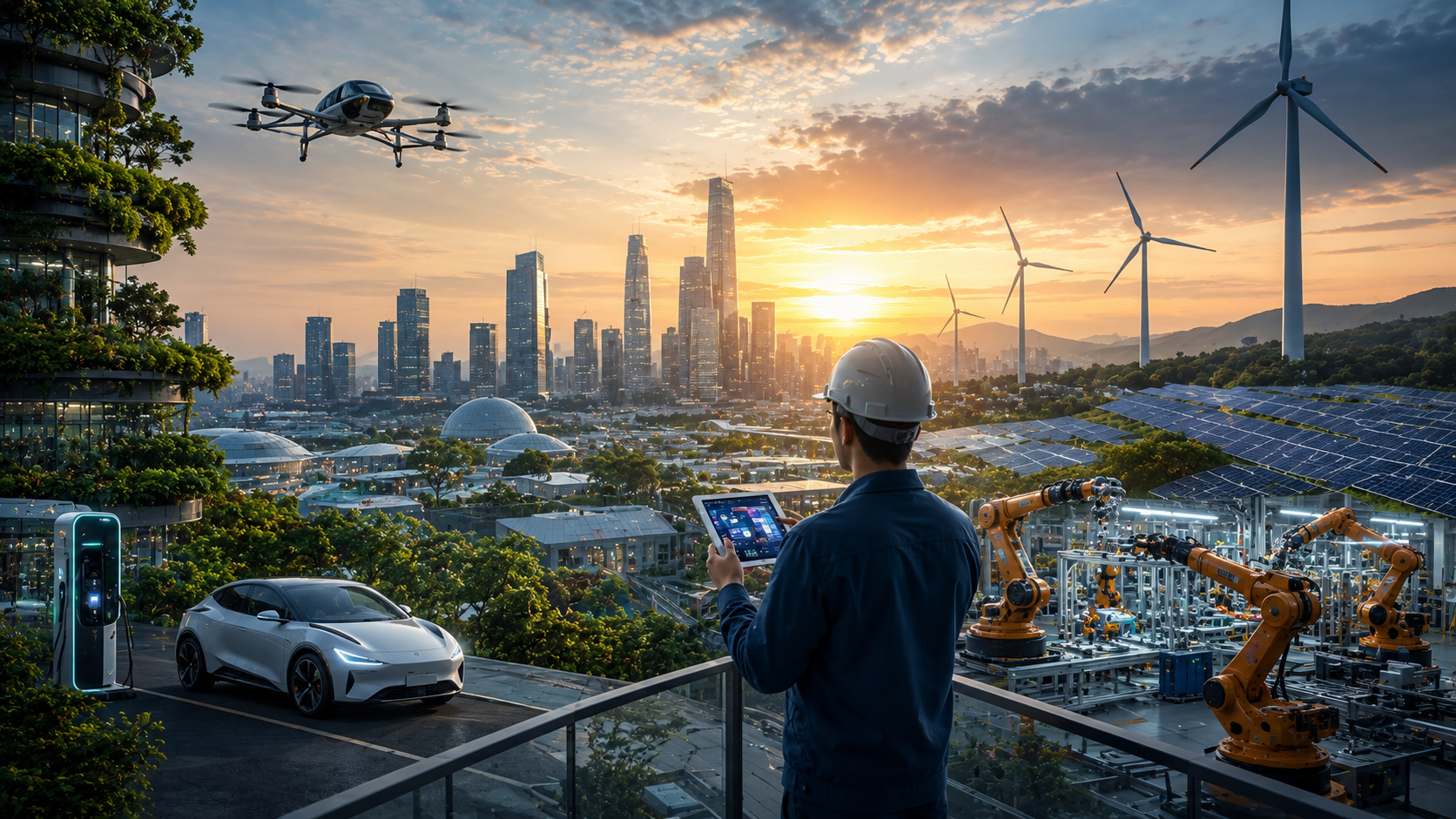
Discover how Future Industries will transform the global economy through AI, renewable energy, biotechnology, automation, and next-generation technologies.
Future Industries Expected to Shape the Next Decade
The global economy is evolving rapidly as technological innovation, environmental priorities, and changing consumer demands reshape industries around the world. Future Industries are expected to drive economic growth, create new career opportunities, and transform how businesses operate over the next decade.
Organizations that recognize these emerging trends early can position themselves for long-term success by investing in innovation, developing new capabilities, and adapting to an increasingly digital economy.
Artificial Intelligence and Machine Learning
Artificial intelligence continues to revolutionize industries by improving automation, decision-making, customer service, and data analysis. AI-powered tools help businesses increase productivity while delivering more personalized customer experiences.
As AI technology advances, it will become a central component of many future industries.
Renewable Energy
The global shift toward clean energy is creating significant opportunities in solar power, wind energy, hydrogen technology, and energy storage. Governments and businesses are investing heavily in sustainable energy solutions to reduce carbon emissions and improve energy security.
Renewable energy is expected to remain one of the fastest-growing industries over the next decade.
Biotechnology and Healthcare Innovation
Advances in biotechnology are transforming medicine, agriculture, and pharmaceutical research. Personalized treatments, genetic engineering, advanced diagnostics, and innovative drug development are improving healthcare outcomes worldwide.
Growing demand for healthcare innovation will continue to drive investment in this sector.
Robotics and Intelligent Automation
Automation technologies are becoming increasingly important across manufacturing, logistics, healthcare, retail, and agriculture. Modern robotics improve efficiency, reduce operational costs, and enhance workplace safety.
Businesses adopting intelligent automation gain greater productivity and operational flexibility.
Smart Manufacturing
Industry 4.0 technologies such as connected machines, Internet of Things (IoT) devices, predictive maintenance, and digital twins are changing modern manufacturing.
Smart factories improve production efficiency, reduce downtime, and enable real-time monitoring throughout manufacturing processes.
Financial Technology (FinTech)
Digital payment systems, online banking, blockchain solutions, and financial automation continue to transform the financial services industry. Consumers increasingly expect secure, fast, and convenient financial experiences.
FinTech innovation is expanding access to financial services while improving transaction efficiency.
Cybersecurity
As digital transformation accelerates, organizations face increasing cyber threats. Businesses require stronger security solutions to protect sensitive information, maintain customer trust, and comply with evolving regulations.
Cybersecurity will remain a critical industry supporting every sector of the global economy.
Sustainable Construction and Green Infrastructure
Governments and developers are investing in environmentally responsible buildings, energy-efficient infrastructure, and sustainable urban development. Green construction reduces environmental impact while lowering long-term operating costs.
Sustainable infrastructure is becoming an important component of future economic development.
Space Technology
Private companies and government agencies continue investing in satellite technology, commercial space exploration, telecommunications, and space research. Advances in launch technology are making space-related industries more accessible than ever before.
Space innovation is expected to generate new business opportunities across multiple sectors.
Advanced Agriculture and Food Technology
Population growth and climate change are increasing demand for efficient food production. Precision agriculture, vertical farming, smart irrigation, and alternative protein technologies are helping improve sustainability and food security.
Agricultural innovation will play an essential role in supporting future global populations.
Digital Education and Online Learning
Technology continues transforming education through virtual classrooms, interactive learning platforms, artificial intelligence tutors, and personalized educational experiences.
As lifelong learning becomes increasingly important, digital education will continue expanding globally.
Circular Economy and Sustainable Business
Businesses are shifting toward circular economy models that emphasize recycling, resource efficiency, waste reduction, and product lifecycle management. Consumers increasingly support organizations committed to environmental responsibility.
Sustainability-focused business models are expected to become standard across many industries.
Conclusion
Future Industries will redefine the global economy through innovation, sustainability, and technological advancement. Artificial intelligence, renewable energy, biotechnology, robotics, cybersecurity, financial technology, smart manufacturing, and sustainable infrastructure are expected to create significant economic opportunities over the next decade. Businesses that embrace these emerging industries today will be better positioned to remain competitive, drive innovation, and achieve long-term success in an evolving marketplace.
FAQ
1. What are Future Industries?
Future Industries are emerging sectors expected to drive economic growth through technological innovation, sustainability, and evolving market demands.
2. Which industries are expected to grow the fastest over the next decade?
Artificial intelligence, renewable energy, biotechnology, cybersecurity, financial technology, robotics, and smart manufacturing are among the fastest-growing industries.
3. Why are Future Industries important?
They create new business opportunities, generate employment, encourage innovation, improve productivity, and support long-term economic development.
4. How can businesses prepare for Future Industries?
Businesses can invest in digital transformation, employee training, research and development, sustainable practices, and emerging technologies to remain competitive.
5. How will Future Industries impact the global economy?
They are expected to increase productivity, improve sustainability, accelerate technological progress, create new markets, and reshape industries worldwide through continuous innovation.
