
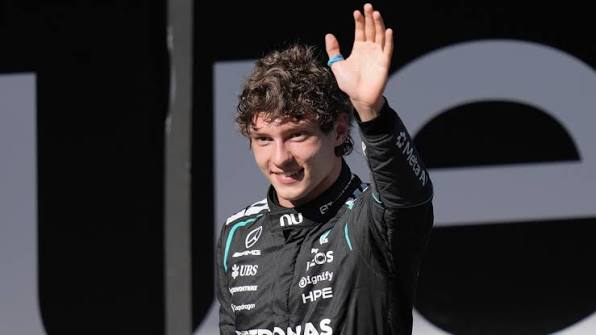
Formula One arrived at a new circuit in Madrid looking for a memorable beginning.
Kimi Antonelli delivered it.
The 20-year-old Mercedes driver won the inaugural Spanish Grand Prix at the new Madring circuit, becoming the first Formula One driver to take victory at the venue and strengthening his position at the top of the 2026 championship.
Antonelli finished ahead of Red Bull's Max Verstappen, while McLaren's Lando Norris completed the podium after starting from pole position.
For Antonelli, it was another significant result in a season that has rapidly transformed him from one of Formula One's most closely watched young talents into a championship leader.
A New Circuit Gets Its First Winner
Every new Formula One venue eventually becomes associated with its first race.
Madrid now has Antonelli.
The Spanish Grand Prix was held at the newly developed Madring circuit, adding a new chapter to Spain's long relationship with Formula One.
New tracks create unusual challenges.
Drivers have less historical data.
Teams have fewer previous setups to study.
Tyre behaviour has to be understood quickly.
Small strategic decisions can therefore become unusually important.
That was certainly the case in Madrid.
Norris Started From Pole
McLaren's Lando Norris entered the race from the strongest possible position after qualifying on pole.
For much of the contest, he appeared capable of converting that advantage into victory.
But Formula One races are rarely determined by outright speed alone.
Timing can change everything.
A virtual safety car created an opportunity for Antonelli and several other drivers to make strategically advantageous pit stops.
Norris was less fortunate.
His later stop cost valuable time and left him in a weaker track position.
Antonelli Took the Opportunity
Winning Formula One races often requires drivers to exploit moments they cannot control.
Safety cars.
Weather.
Traffic.
Tyre degradation.
Pit-stop timing.
Antonelli's race demonstrated that reality.
The virtual safety car provided an opportunity.
Mercedes used it.
Antonelli then had to complete the job.
He did.
Verstappen Finished Second
Max Verstappen crossed the line behind Antonelli, securing second place for Red Bull.
Norris recovered to finish third.
The podium brought together three drivers representing different stages of modern Formula One.
Verstappen is already one of the defining drivers of his generation.
Norris has spent years establishing himself among the sport's leading competitors.
Antonelli represents the next wave.
At only 20, his emergence at the front has happened extraordinarily quickly.
Antonelli's Championship Lead Is Growing
The Madrid victory was Antonelli's eighth win of the 2026 season.
More importantly, it extended his championship advantage over Mercedes teammate George Russell to 81 points after 14 rounds, according to Reuters.
That is a substantial advantage.
But Formula One seasons are long.
Mechanical failures, accidents, poor weekends and changing car performance can alter a championship rapidly.
Antonelli has placed himself in a strong position.
The title is not yet settled.
Mercedes Is Also Leading the Constructors' Battle
Mercedes left Madrid with 503 points in the constructors' standings.
Ferrari stood second with 358, while McLaren had 306 after the race.
The gap demonstrates how effectively Mercedes has accumulated results across the season.
Constructors' championships reward more than occasional victories.
Both cars need to score consistently.
Reliability matters.
Strategy matters.
Development matters.
A fast car that regularly fails to finish does not win championships.
Russell Had a More Difficult Weekend
George Russell finished fifth in Madrid.
For a driver trying to reduce Antonelli's championship advantage, watching his teammate win while finishing several positions behind was costly.
Teammate rivalries can become particularly intense when both drivers have championship-capable machinery.
They have access to similar equipment.
They share engineering information.
They operate inside the same organisation.
But once the lights go out, they are competitors.
Ferrari's Charles Leclerc Finished Fourth
Charles Leclerc brought Ferrari home in fourth place.
It was a solid result but not enough to challenge Antonelli for victory.
Ferrari remains second in the constructors' standings, but Mercedes' points advantage means the Italian team needs more than occasional podiums if it is to close the gap.
Development during the remaining races could still influence the competitive order.
Modern Formula One never stops evolving.
Teams introduce upgrades throughout the year.
A car that struggles at one circuit can look completely different several races later.
Hamilton's Race Ended Early
Lewis Hamilton retired because of a brake problem.
Mechanical retirements are particularly frustrating because they can remove a driver from contention regardless of pace.
They also demonstrate why reliability remains one of Formula One's fundamental requirements.
The fastest car cannot score if it does not reach the finish.
Madrid Was a Different Type of Challenge
Madring's first Formula One weekend was watched closely not only because of the racing but because it represented a new direction for the Spanish Grand Prix.
New circuits are inevitably compared with established venues.
Fans consider overtaking.
Drivers examine safety and track flow.
Teams analyse tyre behaviour.
Organisers study transportation and spectator experience.
Broadcasters evaluate how the circuit appears on television.
The first race becomes a huge real-world test.
Overtaking Was Difficult
Reuters reported that the race became relatively processional after the strategic changes, with limited overtaking opportunities.
That will likely become one of the early talking points around the new venue.
A visually impressive circuit does not automatically produce exciting racing.
Track layout has a major influence on whether cars can follow closely and attempt passes.
Formula One has encountered this challenge at several venues.
Modern F1 Cars Need Space to Race
Formula One cars are extraordinarily fast.
They are also large and aerodynamically complex.
When one car follows another closely, disturbed airflow can affect performance.
Regulations have attempted to improve that problem, but circuit design remains important.
Long braking zones can create overtaking opportunities.
Certain corner combinations can help cars remain close.
Other layouts make passing extremely difficult.
Madring will now have real racing data that organisers and Formula One can study.
New Venues Are About More Than the Track
Hosting Formula One has become part sport, part entertainment and part international event production.
A Grand Prix weekend can attract visitors from around the world.
Hotels fill.
Restaurants benefit.
Corporate hospitality becomes significant.
Sponsors activate campaigns.
Concerts and fan events surround the race.
Cities therefore view Formula One as both a sporting event and a tourism platform.
Madrid's arrival reflects that evolution.
Formula One Has Become a Global Entertainment Product
The sport has expanded its audience well beyond traditional motorsport followers.
Streaming.
Social media.
Documentary series.
Celebrity attendance.
Fashion partnerships.
Music.
Gaming.
All have helped broaden Formula One's cultural reach.
A modern Grand Prix is designed to attract people who may initially come for the event experience and only later become racing fans.
Younger Drivers Are Central to That Growth
Antonelli fits naturally into this new Formula One environment.
He is young enough to have grown up in an era where athletes communicate directly with global audiences through digital platforms.
But social-media popularity alone does not produce race victories.
Formula One remains one of motorsport's most technically demanding competitions.
Drivers must process enormous amounts of information while travelling at extreme speeds.
Antonelli's Rise Has Been Rapid
Young drivers often need time to adjust to Formula One.
The cars are faster.
The braking forces are greater.
Tyre management is more complicated.
Media attention is relentless.
Every mistake is analysed.
Antonelli's ability to accumulate victories so early in his career has therefore attracted considerable attention.
Eight wins in the 2026 season by the Madrid round underline how quickly he has adapted.
Winning Requires More Than Speed
A Formula One driver constantly manages competing demands.
Push hard enough to create a gap.
But not so hard that the tyres overheat.
Attack the kerbs.
But avoid damaging the car.
Save energy when instructed.
Change engine settings.
Monitor competitors.
Respond to radio instructions.
Adjust brake balance.
Prepare for pit entry.
All while racing at speeds that leave almost no room for hesitation.
That complexity is part of what makes young-driver success impressive.
Strategy Has Become Increasingly Visible to Fans
Modern broadcasting has also changed how spectators understand races.
Fans can follow tyre compounds.
Pit-stop gaps.
Telemetry.
Team radio.
Predicted strategies.
That means viewers increasingly understand that a race can be won in the pit lane as well as on the circuit.
Madrid provided a perfect example.
Norris had the pole position and competitive pace.
The virtual safety car changed the strategic equation.
Antonelli benefited.
Luck Exists — But Teams Must Be Ready for It
Motorsport has always contained an element of fortune.
A safety car can appear at the ideal moment for one driver and the worst possible moment for another.
Rain can arrive one lap after a pit stop.
Debris can cause a puncture.
But calling every strategic gain "luck" misses part of the picture.
Teams need to recognise opportunities instantly.
Engineers model scenarios throughout the race.
Drivers must react.
Pit crews must execute.
An opportunity only matters if a team converts it.
Norris Still Took Valuable Points
Third place was not the result Norris wanted after starting from pole.
But championship campaigns require drivers to maximise difficult situations.
A podium still produces significant points.
Over a full season, damage limitation can matter almost as much as victory.
One poor strategic outcome does not define a championship.
Repeatedly failing to recover from difficult weekends does.
Verstappen Remains a Benchmark
Max Verstappen's second-place finish was another reminder of his ability to remain near the front.
Experienced champions often accumulate points even on weekends when victory is unavailable.
That consistency is one reason championship battles can remain alive for long periods.
Antonelli may have the points advantage.
But the remaining field still contains drivers capable of winning races.
Formula One Now Moves Towards Azerbaijan
The championship continues with the Azerbaijan Grand Prix on September 26.
Baku presents a dramatically different challenge from Madrid.
Its street circuit combines extremely tight sections with one of Formula One's longest full-throttle stretches.
Teams therefore face difficult aerodynamic compromises.
A setup designed for maximum straight-line speed can sacrifice cornering performance.
More downforce improves grip but creates drag.
Every Circuit Asks a Different Question
That variation is one of Formula One's defining characteristics.
A car must race on traditional permanent circuits.
Street tracks.
High-speed layouts.
Slow technical venues.
Hot conditions.
Cool conditions.
Different asphalt.
Different elevations.
A championship-winning package needs to work across all of them.
Madrid tested Mercedes one way.
Baku will test it differently.
Antonelli Has Momentum
Eight victories and an 81-point championship advantage create a strong position for the Mercedes driver.
But momentum in motorsport can disappear quickly.
One retirement can dramatically change a points gap.
Two poor races can create pressure.
A rival can introduce an upgrade and suddenly become much faster.
That uncertainty is precisely why championships remain compelling.
Madrid Now Has Its First Piece of Formula One History
Years from now, if Madring becomes a long-term fixture on the calendar, fans will look back at the first race.
They will remember the first pole.
The first podium.
The first controversy.
And the first winner.
That name is now Kimi Antonelli.
At 20 years old, the Mercedes driver did more than win another race.
He became permanently connected to the beginning of Formula One's Madrid era.
Whether the same season ends with him becoming world champion remains unresolved.
For now, Madrid belongs to Antonelli.