
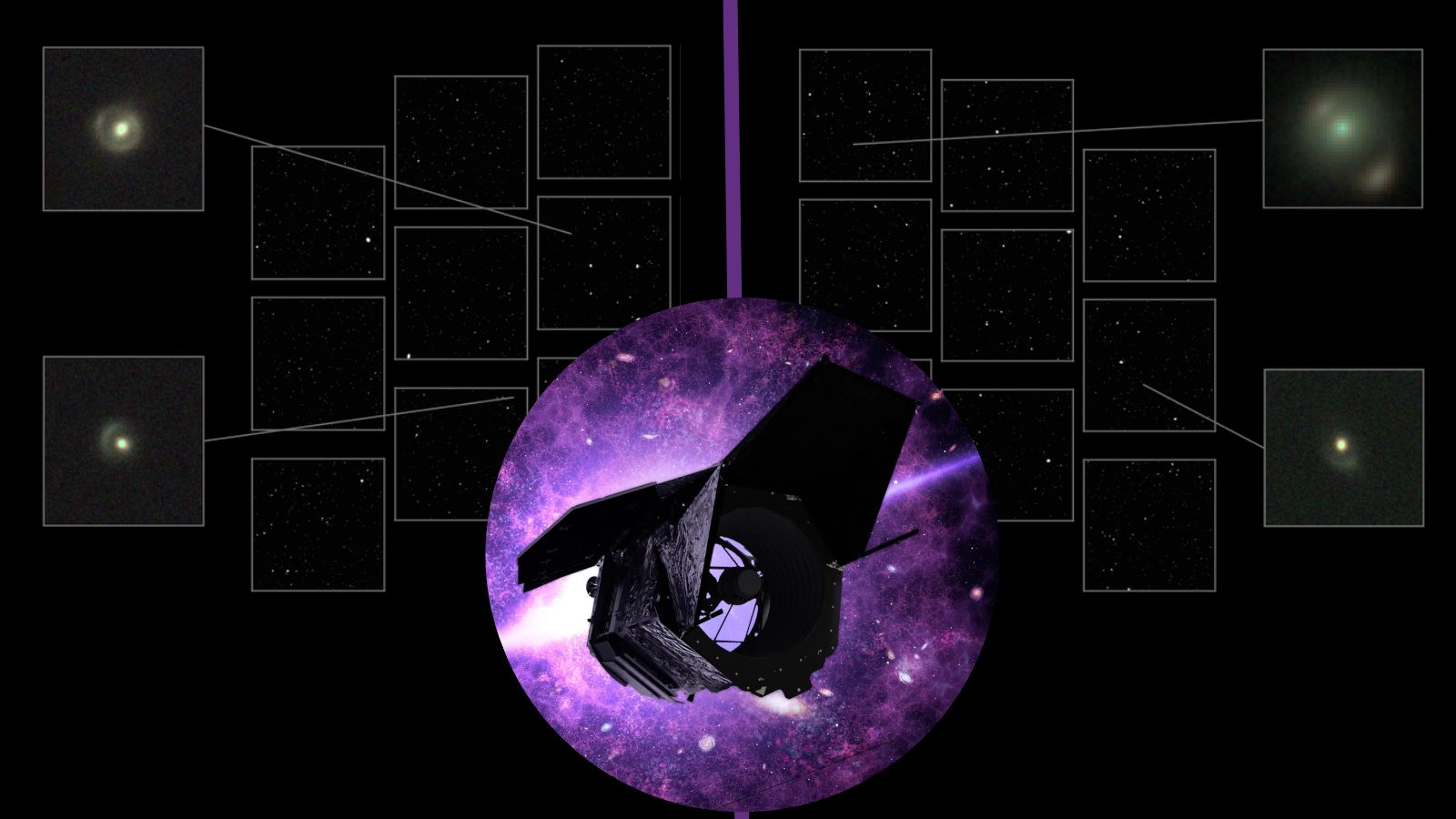
NASA Says Roman Space Telescope Could Explore the Universe for 22 Years
NASA's newest major space telescope may have received an unexpected gift before its scientific mission has even properly begun:
time.
The Nancy Grace Roman Space Telescope, launched on August 30, could potentially operate for as long as 22 years, according to NASA officials.
That is more than double the observatory's earlier expected maximum operational period of roughly 10 years.
The reason is surprisingly straightforward.
Roman arrived in space with much more usable fuel than mission planners expected.
A highly accurate launch and exceptionally efficient early course corrections mean the spacecraft has consumed only a small fraction of the propellant originally budgeted for those manoeuvres.
If the telescope's instruments and other systems remain healthy, that extra fuel could dramatically extend one of NASA's most ambitious astronomy missions.
Roman Is Already on Its Way
The telescope was launched aboard a SpaceX Falcon Heavy rocket on August 30.
It is now travelling towards a region of space known as the Sun-Earth Lagrange Point 2, or L2, approximately 1.6 million kilometres from Earth.
Roman is expected to reach its destination in early December.
L2 has become an important location for modern astronomy.
NASA's James Webb Space Telescope also operates around this region.
Why Put a Telescope So Far Away?
A space telescope needs an environment where observations can be made as consistently as possible.
At L2, a spacecraft can maintain a relatively stable relationship with Earth and the Sun while orbiting the Sun alongside our planet.
That makes it particularly useful for sensitive astronomical observations.
But placing a telescope more than a million kilometres from Earth creates another problem:
repairs become extraordinarily difficult.
That makes reliability and fuel management critical.
Roman Was Originally Designed for a Much Shorter Mission
Roman's core science mission was designed around approximately five years of operations, with the possibility of an extension.
Before launch, NASA expected the observatory could potentially operate for around a decade.
Now engineers believe the available fuel could support operations for up to 22 years.
That does not guarantee Roman will still be operating more than two decades from now.
Spacecraft have many components.
Electronics can fail.
Instruments can degrade.
Unexpected technical problems can develop.
Fuel is only one factor determining lifespan.
But having enough propellant removes one major limitation.
The Launch Was Remarkably Accurate
Space missions budget fuel partly because rockets cannot place spacecraft on absolutely perfect trajectories every time.
After separation from the launch vehicle, spacecraft normally perform correction manoeuvres.
Those burns adjust their speed and direction.
Mission planners budget conservatively because they need enough propellant to correct larger-than-expected errors.
Roman did not need anything close to that amount.
NASA officials said its first mid-course correction consumed less than 10% of the fuel allocated for that manoeuvre.
That leaves much more propellant available for future operations.
Roman Also Had More Fuel From the Beginning
Another engineering advantage emerged before launch.
The completed spacecraft weighed less than the mission's maximum allowable launch mass.
That gave engineers room to fill its propulsion tanks completely.
Combined with the precise launch trajectory, that extra propellant significantly improved Roman's potential lifetime.
It is an example of how engineering margins can create scientific opportunities years later.
What Will Roman Actually Study?
Roman has several enormous scientific goals.
One is understanding dark energy.
Another is investigating dark matter.
It will also search for planets outside our Solar System and study the structure and evolution of the universe.
These questions sit near the frontier of modern physics.
Scientists know the universe is expanding.
They also know the expansion is accelerating.
But the underlying explanation remains one of cosmology's biggest mysteries.
Dark Energy Is Everywhere — Yet Poorly Understood
Astronomers use the term dark energy for whatever is driving the accelerated expansion of the universe.
It appears to account for a large fraction of the cosmos.
Yet scientists still do not know exactly what it is.
Roman will study enormous numbers of galaxies and cosmic structures.
By measuring how matter is distributed across space and how that distribution has changed over cosmic history, researchers hope to test competing explanations for cosmic acceleration.
A longer mission means potentially more observations.
More observations mean better statistics.
Dark Matter Presents a Different Mystery
Dark matter does not emit light in the ordinary way.
Astronomers infer its existence primarily through gravity.
Galaxies and galaxy clusters behave as though they contain substantially more mass than we can see.
Roman will help map how matter is distributed across the universe.
One technique involves gravitational lensing.
Mass bends space-time.
Light travelling past massive objects can therefore be distorted.
By measuring those distortions across huge areas of sky, scientists can infer the distribution of otherwise invisible matter.
Roman Will Also Hunt for Exoplanets
The telescope's work is not limited to cosmology.
Roman is expected to discover planets orbiting other stars.
One of its major techniques will be gravitational microlensing.
When one star passes almost directly in front of another from our perspective, the gravity of the foreground star can magnify the background star's light.
If the foreground star has a planet, the planet can produce an additional signature in that magnification.
This allows astronomers to detect worlds that can be difficult to find using other techniques.
Some Could Be Far From Their Stars
Many exoplanet surveys are particularly effective at discovering planets orbiting relatively close to their host stars.
Microlensing can reveal planets at wider orbital distances.
It can also potentially detect free-floating planets — worlds travelling through space without orbiting a star.
Understanding these populations is important because it helps scientists determine how planetary systems form and evolve.
Roman and Webb Are Different Telescopes
It would be easy to think Roman is simply the next James Webb Space Telescope.
It is not.
The two observatories are designed to complement one another.
Webb is extraordinarily powerful when astronomers want to study particular objects in great detail.
Roman is designed to survey enormous areas of the sky efficiently.
A useful analogy is zoom versus panorama.
Webb can investigate selected targets deeply.
Roman can identify huge populations of interesting targets and study cosmic structures on a much broader scale.
Roman's Field of View Is a Major Advantage
Roman's Wide Field Instrument is designed to capture a much larger area of sky in a single observation than Hubble can.
That means surveys that would require enormous amounts of Hubble observing time can be performed far more efficiently.
Scale matters in astronomy.
Studying one galaxy can reveal fascinating physics.
Studying millions can reveal patterns that are impossible to see from individual examples.
Twenty-Two Years Would Change the Scientific Possibilities
Mission longevity is not merely about collecting more of the same data.
Time itself creates new scientific opportunities.
Astronomers can observe how objects change.
They can revisit regions of sky.
They can compare measurements separated by many years.
Unexpected astronomical events can be followed.
New questions can be investigated that mission designers had not even considered at launch.
This has happened repeatedly with long-lived observatories.
Hubble Demonstrated the Value of Longevity
The Hubble Space Telescope is perhaps the best example.
Launched in 1990, Hubble dramatically exceeded the scientific era originally imagined for it.
Entire areas of astronomy developed while the telescope was already operating.
Researchers devised new uses for its instruments.
Later generations of scientists asked questions that did not exist when Hubble was designed.
Roman could potentially benefit from the same phenomenon.
A telescope operating into the 2040s would be serving a scientific community very different from the one that launched it.
Technology Around the Telescope Will Improve Too
The spacecraft itself may remain largely unchanged.
The computers analysing its data will not.
Artificial intelligence and statistical techniques are advancing rapidly.
Future researchers may extract information from Roman observations in ways today's astronomers cannot yet anticipate.
This is an important feature of large scientific missions.
Data can remain valuable long after it is collected.
Astronomical archives are repeatedly revisited when new analytical techniques become available.
Longer Missions Produce Larger Archives
If Roman operates for two decades, its archive could become one of astronomy's most important scientific resources.
Researchers around the world could use its observations for projects unrelated to the telescope's original headline objectives.
One team might study distant galaxies.
Another could examine stellar populations.
Another could search for unusual transient events.
Another could combine Roman observations with data from future telescopes that have not yet been launched.
Fuel Is Still Needed Even at L2
Roman will not simply arrive at L2 and remain perfectly stationary.
Lagrange-point observatories operate in orbits around the region and periodically require manoeuvres.
Propellant helps maintain the spacecraft's trajectory and orientation.
Once that fuel becomes too depleted, maintaining the required orbit can eventually become impossible.
That is why the unexpectedly large fuel reserve matters so much.
It effectively gives engineers a larger operational budget.
There Is Still No Guarantee of 22 Years
NASA's estimate should be understood correctly.
Roman now has enough fuel to make a mission lasting as long as 22 years possible.
It does not mean NASA has guaranteed that duration.
Space is unforgiving.
Radiation affects electronics.
Mechanical systems age.
Detectors can degrade.
Communications hardware can fail.
The observatory will need to remain healthy across thousands of days of continuous operation.
NASA will learn much more once Roman reaches L2 and begins commissioning.
First Science Comes Before Longevity
The immediate priority is getting the observatory safely to its destination.
Then its systems and instruments need to be checked and calibrated.
Only after commissioning can Roman begin routine scientific observations.
Mission engineers will be watching every system carefully.
The possibility of a 22-year mission is exciting.
But the first goal is making the first year successful.
Space Telescopes Are Investments Across Generations
Large observatories take years to design and build.
They require thousands of engineers, scientists and technicians.
They also cost substantial amounts of public money.
Extending a mission can therefore produce exceptional scientific value.
Once the telescope is already in space and functioning, every additional productive year allows researchers to obtain more science from the original investment.
That makes longevity enormously valuable.
Roman Could Work Alongside Future Observatories
A 22-year lifespan would potentially allow Roman to overlap with future generations of space and ground-based telescopes.
That creates opportunities for coordinated observations.
One telescope could identify an unusual object.
Another could study it at different wavelengths.
Ground observatories could provide spectroscopy.
Spacecraft could monitor changes over time.
Modern astronomy increasingly works this way.
No single telescope needs to do everything.
The scientific power comes from combining them.
Astronomy Often Produces Its Biggest Surprises Unexpectedly
Mission designers establish clear scientific goals because observatories need specific requirements.
But some of astronomy's most important discoveries were not the primary reason particular instruments were built.
A telescope simply gives humanity another way to observe the universe.
The universe then provides surprises.
The longer an observatory remains operational, the more opportunities it has to encounter something unexpected.
Roman Is Only Beginning Its Journey
The Nancy Grace Roman Space Telescope still has millions of kilometres of travel and extensive commissioning ahead before its full scientific programme begins.
But engineers have already received unusually good news.
The Falcon Heavy launch placed Roman on such an accurate trajectory that the telescope required far less corrective fuel than expected.
Its lower-than-maximum launch mass also allowed its propulsion system to begin the mission fully fuelled.
Together, those factors mean NASA now believes the observatory could potentially operate for up to 22 years.
For a telescope designed to investigate some of the universe's biggest unanswered questions, that extra time could prove enormously important.
Roman was built to look deep into space.
It may now have much longer to do it.