
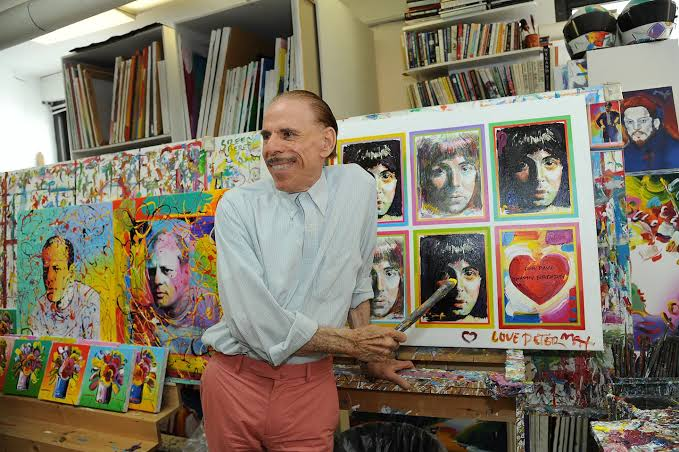
Peter Max Dies at 88, Leaving Behind the Psychedelic Art That Defined an Era
Some artists become famous for individual paintings.
Others become associated with an entire visual era.
Peter Max belonged to the second group.
The pop artist whose explosive colours, cosmic imagery and psychedelic compositions became intertwined with the culture of the 1960s has died at the age of 88.
A spokesperson for his family said Max died on Monday following a long illness.
His death closes a remarkable chapter in modern popular art — one in which the boundaries between galleries, posters, music, advertising and everyday visual culture became increasingly difficult to separate.
Art That Looked Like the 1960s Felt
The 1960s were years of dramatic cultural change.
Music changed.
Fashion changed.
Political activism expanded.
Young people challenged traditional social expectations.
New forms of spirituality entered popular culture.
And visual design became louder, brighter and more experimental.
Max's work seemed perfectly suited to that moment.
His images frequently combined intense colour with stars, planets, faces, flowers and cosmic landscapes.
They looked optimistic, strange and futuristic at the same time.
Reuters described his boldly coloured, dreamlike work as an artistic backdrop to America's hippie movement.
His Work Escaped the Gallery
Max's cultural influence cannot be understood simply by looking at traditional museum exhibitions.
His art travelled.
It appeared on posters.
Album-related material.
Advertisements.
Commercial products.
Magazine covers.
Clothing.
And countless pieces of popular visual culture.
That accessibility helped make his style instantly recognisable.
People did not necessarily have to visit a museum to encounter Peter Max.
His visual language could appear almost anywhere.
That Was Part of the Revolution
For much of art history, access to major artwork depended heavily on physical location.
A painting existed in a particular church, palace, private collection or museum.
Mass printing changed that relationship.
Photography changed it further.
By the 1960s, popular artists could distribute imagery to enormous audiences through commercial reproduction.
Art could hang on a teenager's bedroom wall.
That altered who experienced it and how.
Max understood the possibilities of that new environment.
His Style Became Commercially Powerful
The same qualities that made Max popular also made him unusually successful commercially.
His images were immediately identifiable.
That is extraordinarily valuable in advertising.
Brands want visual language that audiences can recognise almost instantly.
Max's style provided exactly that.
His artwork eventually became associated with commercial campaigns and products far beyond the traditional art market.
Fine Art and Commercial Art Began Mixing
This placed Max inside a larger transformation.
Pop art challenged assumptions about what subjects belonged in serious art.
Artists drew from advertising, celebrities, consumer products and mass media.
At the same time, commercial culture increasingly borrowed the language of contemporary art.
The boundaries blurred.
Was an image still art when reproduced thousands of times?
Could a commercial poster be culturally significant?
Did working with major companies diminish an artist's creative status?
Those questions were central to twentieth-century art.
They remain relevant today.
Max Was Born Far From the American Counterculture
Peter Max was born in Berlin in 1937, according to Reuters.
His childhood unfolded across several countries before his family eventually settled in the United States.
That international upbringing preceded a career that became deeply associated with American visual culture.
By the 1960s, New York was one of the centres of a rapidly changing artistic world.
Max found himself in the right environment at an extraordinary cultural moment.
Space Became Part of His Visual Language
One recurring feature of Max's work was fascination with cosmic imagery.
Stars.
Planets.
Sunbursts.
Floating figures.
Expansive skies.
This made sense in the period in which his reputation developed.
The Space Age had captured the public imagination.
Humans were preparing to walk on the Moon.
Science fiction was entering mainstream culture.
Space represented both technological progress and philosophical possibility.
Max's artwork absorbed that optimism.
Colour Was Almost a Character
His work often used colour aggressively rather than cautiously.
Bright oranges could sit beside intense blues.
Reds collided with yellows.
Purple and green occupied the same composition.
The result was difficult to ignore.
Colour was not simply used to represent objects realistically.
It created emotion.
That became one of the defining qualities of psychedelic visual culture.
Music and Art Were Changing Together
The rise of psychedelic art cannot be separated from music.
Rock concerts needed posters.
Albums needed covers.
Festivals required promotional material.
Musicians were experimenting with sound while designers experimented with typography, colour and composition.
The result was an era in which music and visual design reinforced each other.
Even people unfamiliar with individual artists can recognise the broader psychedelic aesthetic today.
The Style Outlived the Movement
The hippie movement eventually faded from its cultural peak.
The visual language did not.
Psychedelic design has repeatedly returned in fashion, advertising, music and digital media.
Modern designers continue borrowing distorted typography, saturated colour and surreal imagery from the period.
That longevity demonstrates how powerful the original visual movement became.
Max Became Bigger Than One Artistic Period
Although closely associated with the 1960s, Max continued producing work for decades.
His later projects included portraits and interpretations of American symbols.
The Statue of Liberty became a particularly important subject in his work.
That represented an interesting evolution.
The artist once associated with counterculture increasingly engaged with some of the country's most recognisable national imagery.
He Also Painted Famous People
Max's subjects included prominent cultural and political figures.
Portraiture allowed him to apply his distinctive colour language to people already embedded in public consciousness.
This created another bridge between fine art and celebrity culture.
Again, the concept feels familiar today.
Artists regularly collaborate with celebrities, fashion houses and brands.
In Max's era, that relationship was still developing into its modern form.
Mass Popularity Created Debate
Commercial success can complicate an artist's critical reputation.
Work that becomes extremely popular is sometimes treated suspiciously by parts of the art establishment.
If millions of people recognise an image, does that make it less serious?
If an artist licenses work commercially, does that reduce its artistic importance?
Max's career existed inside that tension.
Yet cultural influence is not measured only by critical approval.
It can also be measured by how deeply an aesthetic enters everyday life.
By that standard, his reach was enormous.
Posters Changed How Young People Experienced Art
Affordable posters were particularly important.
A young person did not need the money to purchase an original painting.
They could buy a reproduction.
That meant bedrooms and student spaces became miniature galleries of contemporary culture.
Music posters.
Political images.
Film stars.
Psychedelic artwork.
Visual identity became part of youth identity.
Max's imagery was perfectly suited to that environment.
Today's Digital Culture Has a Similar Dynamic
There is an interesting connection between Max's era and today's internet.
In the twentieth century, mass printing allowed artwork to escape elite spaces.
Today, social media allows images to circulate globally within seconds.
An illustrator can create something in London, São Paulo or Seoul and reach millions of people almost immediately.
The distribution technology changed.
The fundamental idea did not.
Art becomes culturally powerful when people can see it.
Digital Artists Face Similar Questions
Today's artists also navigate the relationship between creativity and commerce.
They sell prints.
Create brand collaborations.
Design digital products.
Work with musicians.
Create merchandise.
Publish directly to social platforms.
Some use artificial intelligence or generative software.
The same old question remains:
Where does fine art end and commercial design begin?
Perhaps there was never a clean boundary.
Max Understood Visual Branding Before the Term Became Everywhere
Modern companies spend enormous amounts building distinctive visual identities.
Creators do the same.
A successful artist on social media often has a style recognisable before the viewer even reads the username.
Max achieved something similar decades earlier.
His colour palette and cosmic imagery functioned almost like a visual signature.
People could recognise the aesthetic immediately.
His Work Reflected Optimism
One reason Max's imagery remains associated with its era is its sense of possibility.
Much of the work feels expansive.
Cosmic.
Colourful.
Almost utopian.
That reflected one side of the 1960s counterculture — the belief that society, consciousness and human relationships could be transformed.
The period itself was far more complicated.
War, political violence and social conflict existed alongside that optimism.
Art often captured the hope rather than the reality.
Every Generation Reinterprets the 1960s
The decade continues to influence culture because later generations repeatedly rediscover it.
Fashion cycles bring back flared clothing and bold prints.
Musicians revive psychedelic sounds.
Designers borrow vintage typography.
Film and television recreate the period.
Young people encounter its imagery without necessarily experiencing the politics or social conditions that originally produced it.
That can transform historical counterculture into contemporary aesthetic.
Art Can Become Historical Evidence
Artwork tells us something about the period in which it was made.
Not because it provides an objective record.
But because it reveals what people imagined.
What they feared.
What they desired.
What looked modern to them.
Max's cosmic colours help explain how part of the 1960s imagined the future.
Space travel, spirituality, peace and technological progress could coexist in the same visual universe.
His Legacy Also Shows the Power of Reproduction
There is only one original version of a traditional painting.
A poster can exist in thousands or millions of copies.
That changes the nature of cultural influence.
An image becomes part of everyday life rather than something encountered occasionally.
This was fundamental to pop culture.
It remains fundamental to internet culture.
Memes are perhaps the extreme modern version: images reproduced, modified and redistributed almost endlessly.
Culture Is Often Remembered Visually
People who never lived through the 1960s still carry an image of the decade.
Tie-dye.
Long hair.
Concert posters.
Peace symbols.
Bright colours.
Psychedelic patterns.
Some of those associations are simplifications.
But visual culture is powerful precisely because it compresses complicated history into instantly recognisable symbols.
Max helped create that visual memory.
His Career Also Had Difficult Later Chapters
Max's later years attracted attention beyond his artwork, including legal and family disputes surrounding his affairs and the management of his work as his health declined.
Those issues became part of the public story around the artist.
But they do not erase the broader cultural significance of the visual language he helped popularise.
An artist's biography and an artist's influence are related, but they are not identical.
The Art Market Will Continue Reassessing His Work
The death of a major artist often triggers renewed attention.
Museums revisit collections.
Critics reassess careers.
Collectors examine provenance.
Younger audiences encounter the work for the first time.
Max's enormous commercial output makes that process particularly interesting.
His work exists across different formats and periods, from original paintings to widely distributed reproductions.
Popular Does Not Mean Temporary
Mass culture can sometimes be dismissed as disposable.
History repeatedly shows otherwise.
Film posters become collectible.
Commercial photography enters museums.
Album covers become design classics.
Advertising influences generations of artists.
Popular imagery can survive long after the product or campaign that originally carried it disappears.
Max's work demonstrates that phenomenon.
His Influence Can Still Be Seen
Look at contemporary festival graphics.
Fashion prints.
Music visuals.
Digital illustration.
Retro advertising.
Even some AI-generated psychedelic imagery.
The visual vocabulary Max helped popularise remains familiar.
Many designers using it today may never have consciously studied his work.
Influence often works that way.
A style becomes absorbed into culture until its origins become difficult to trace.
Peter Max Leaves Behind More Than Paintings
Peter Max died at 88 after a career spanning more than six decades.
His legacy includes individual artworks, commercial projects and a recognisable artistic identity.
But perhaps his larger contribution was demonstrating how far visual art could travel.
From a canvas to a poster.
From a gallery to a bedroom wall.
From counterculture to advertising.
From the 1960s into the digital age.
The world that produced Peter Max's psychedelic imagery has changed dramatically.
The colours have not disappeared.
They simply found new places to live.