
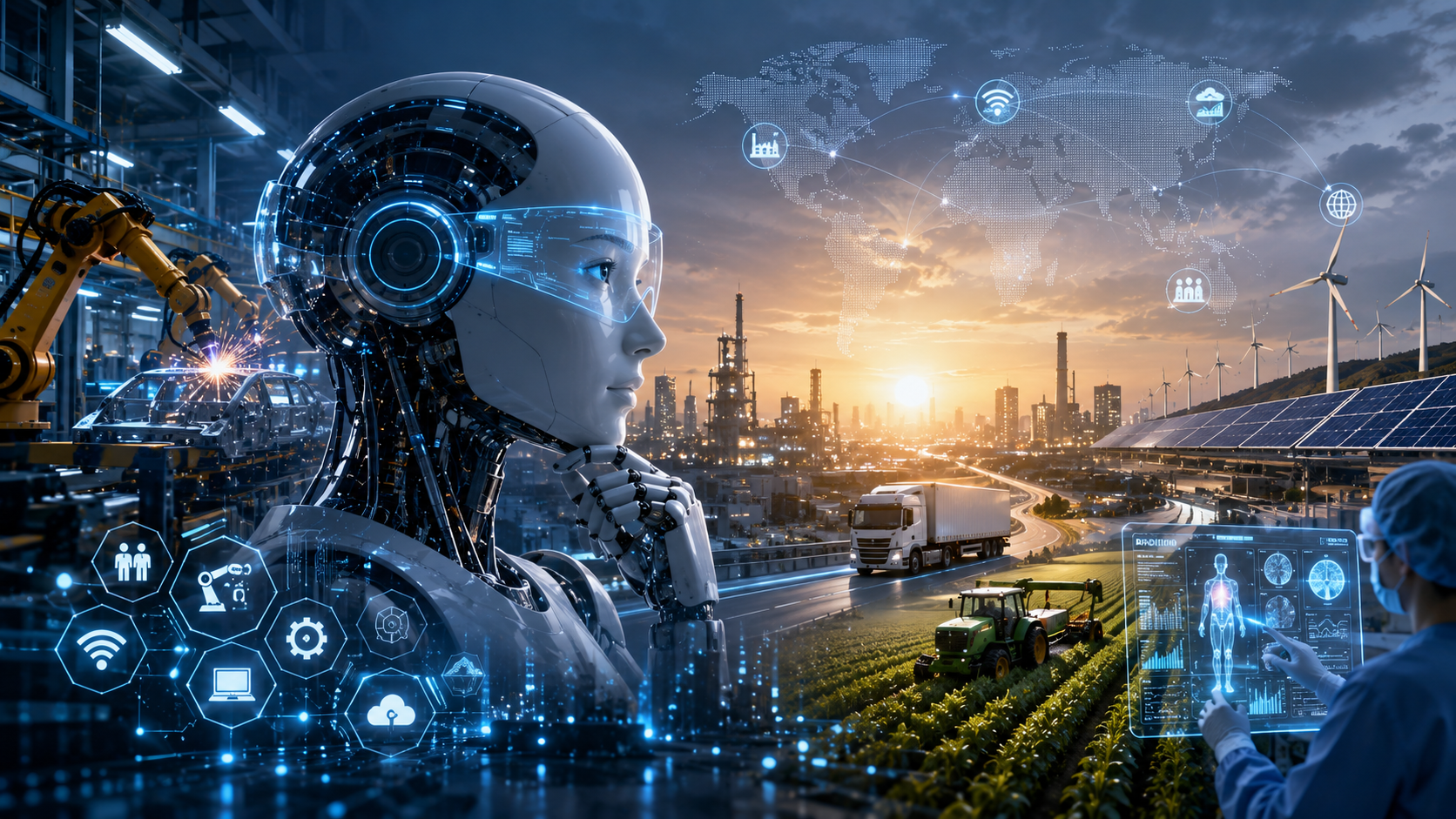
Explore how AI Future innovations are transforming industries through automation, smarter decision-making, and digital transformation.
Artificial Intelligence and the Future of Industries
Artificial intelligence is reshaping the global economy by changing how businesses operate, make decisions, and deliver value to customers. From manufacturing and healthcare to finance and retail, AI is becoming an essential technology that improves efficiency, drives innovation, and supports sustainable growth. Understanding the AI Future helps organizations prepare for technological advancements that will continue transforming industries in the years ahead.
Businesses that embrace artificial intelligence today are better positioned to remain competitive in an increasingly digital world.
Automating Routine Operations
AI enables organizations to automate repetitive and time-consuming tasks such as data entry, customer support, inventory management, and document processing. Automation reduces manual workloads while improving speed and accuracy.
Employees can focus more on strategic, creative, and customer-focused responsibilities.
Improving Business Decision-Making
Artificial intelligence analyzes large amounts of information in real time, helping businesses identify patterns, forecast trends, and make informed decisions based on reliable data.
Data-driven insights are becoming a defining characteristic of the AI Future.
Transforming Manufacturing
Manufacturers use AI-powered systems to monitor production lines, predict equipment maintenance, improve quality control, and optimize supply chains.
Smart factories increase productivity while reducing operational costs and downtime.
Advancing Healthcare
Healthcare providers use AI to assist with medical imaging, disease detection, patient monitoring, treatment planning, and administrative automation. These technologies improve both efficiency and patient care.
AI continues expanding opportunities across the healthcare industry.
Revolutionizing Financial Services
Banks and financial institutions apply artificial intelligence to fraud detection, credit assessment, investment analysis, customer service, and risk management.
AI improves financial accuracy while strengthening security and operational performance.
Enhancing Retail and E-Commerce
Retail businesses use AI to personalize customer experiences, recommend products, optimize pricing, forecast demand, and manage inventory more efficiently.
Personalized shopping experiences improve customer satisfaction and sales performance.
Strengthening Cybersecurity
Artificial intelligence helps organizations detect unusual activity, identify cyber threats, and respond to security incidents more quickly. AI-powered monitoring improves protection against increasingly sophisticated cyberattacks.
Cybersecurity remains a critical part of digital transformation.
Supporting Sustainable Development
AI contributes to sustainability by improving energy efficiency, reducing waste, optimizing transportation, and supporting environmentally responsible business practices.
Organizations increasingly use AI to balance operational performance with environmental responsibility.
Creating New Career Opportunities
Although AI automates certain tasks, it also creates demand for new skills and professional roles in data science, machine learning, cybersecurity, AI development, and digital transformation.
Continuous learning will remain essential as industries evolve.
Encouraging Innovation Across Industries
Artificial intelligence enables organizations to develop new products, improve customer experiences, optimize operations, and discover emerging business opportunities.
Innovation will continue driving the long-term AI Future of global industries.
Conclusion
The AI Future represents one of the most significant technological transformations in modern business. Artificial intelligence is improving productivity, strengthening decision-making, enhancing customer experiences, and driving innovation across nearly every industry. Organizations that invest in AI, develop digital capabilities, and prepare their workforce for technological change will be better positioned to succeed in the rapidly evolving global economy.
FAQ
1. What does AI Future mean?
AI Future refers to the continued development and adoption of artificial intelligence technologies that will shape industries, businesses, and everyday life in the coming years.
2. Which industries benefit most from artificial intelligence?
Manufacturing, healthcare, finance, retail, logistics, education, cybersecurity, and transportation are among the industries experiencing significant AI-driven transformation.
3. How does AI improve business performance?
AI automates repetitive tasks, analyzes large datasets, improves decision-making, enhances customer experiences, reduces costs, and increases operational efficiency.
4. Will AI replace human workers?
AI is expected to automate certain routine tasks while creating new opportunities in technology, data analysis, digital transformation, and other emerging fields that require human expertise.
5. Why is understanding the AI Future important?
Understanding the AI Future helps businesses, professionals, and investors prepare for technological change, identify emerging opportunities, and remain competitive in an increasingly AI-driven economy.
