Scientists Link Himalayan Glacier Disaster to a Rapidly Warming Climate
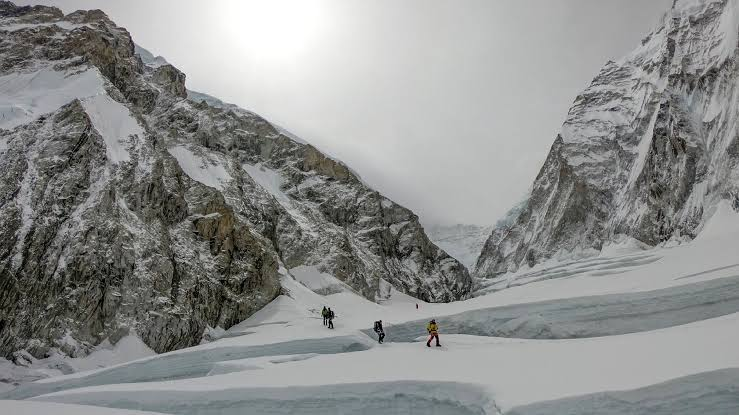
The Himalayas have always been a landscape shaped by ice.
Now scientists are warning that a warming climate is changing that landscape in ways capable of producing sudden and devastating disasters.
Researchers from the World Weather Attribution group say climate change was highly likely to have contributed to the catastrophic glacier collapse that struck Nepal and Tibet in late August 2026.
The collapse unleashed destructive flooding through mountain communities, killing around 1,400 people and leaving thousands more missing.
The disaster was enormous.
But the scientific questions behind it extend far beyond a single valley.
What happens to the world's highest mountains as temperatures rise?
And how many communities downstream are prepared for the consequences?
A Glacier Is More Than Ice Sitting on a Mountain
Glaciers can appear permanent.
They are not.
They are enormous moving bodies of ice shaped by snowfall, temperature, gravity and the terrain beneath them.
When those conditions change, glaciers respond.
Warmer temperatures can increase melting.
Ice can become thinner.
Meltwater can move through cracks.
Frozen ground beneath and around glaciers can begin to thaw.
Over time, those changes can alter the stability of an entire mountain system.
Scientists Point to Warming Deep Inside the Landscape
The World Weather Attribution researchers said rapidly increasing temperatures in the Himalayas have contributed to glacier thinning.
But surface melting is only part of the concern.
Warming can also affect ice and permafrost embedded deep within mountain bedrock.
Permafrost is ground that remains frozen for long periods.
In high mountains, frozen material can effectively help bind rock together.
As it thaws, slopes that appeared stable can become more vulnerable to failure.
Researchers said these processes contributed to the conditions surrounding the August collapse.
The Himalayas Are Particularly Important
The Himalayan mountain system stretches across several countries and influences the lives of hundreds of millions of people.
Its snowfields and glaciers feed major river systems.
Those rivers support agriculture, drinking-water supplies and hydropower far downstream.
Changes occurring high in the mountains therefore do not remain in the mountains.
They can affect water security across large parts of Asia.
Climate Change Does Not Mean Every Collapse Has One Cause
This distinction is important.
Mountain disasters are complex.
Geology matters.
Slope angle matters.
Weather matters.
Ice conditions matter.
Earthquakes and other natural processes can matter.
Scientists therefore generally do not describe climate change as the sole explanation for every individual disaster.
Instead, attribution research asks whether human-driven warming changed the conditions that made an event possible or more likely.
In this case, researchers concluded that climate change was highly likely to have contributed to the glacier collapse.
Warming Can Change Risk Quietly
One difficulty with glacier hazards is that destabilisation may happen gradually before the final collapse happens suddenly.
A mountain can look almost unchanged from a nearby village.
Inside the ice and rock, however, conditions may be evolving.
Ice becomes thinner.
Frozen fractures begin thawing.
Water penetrates new areas.
Structural support weakens.
Then a threshold is crossed.
The visible disaster can happen in minutes even though the processes behind it developed over years.
That Makes Monitoring Essential
Scientists increasingly use satellites, drones, seismic instruments and ground-based sensors to monitor unstable mountain regions.
Satellite imagery can reveal changes in glacier movement.
Radar can detect surface displacement.
Weather stations track temperature and precipitation.
Seismic instruments can identify movement within mountains.
Combining those technologies could help authorities identify areas where risk is increasing.
But monitoring the Himalayas is difficult.
The terrain is enormous.
Many areas are remote.
Weather can be extreme.
Infrastructure is limited.
Not every dangerous slope can be continuously instrumented.
Early Warning Can Still Save Lives
Scientists do not necessarily need to predict the exact minute a glacier will collapse to reduce casualties.
Risk maps can identify vulnerable communities.
River sensors can detect sudden changes.
Communication networks can send warnings downstream.
Evacuation routes can be planned before an emergency.
Local authorities can conduct drills.
Infrastructure can be positioned away from the most dangerous channels.
The goal is not perfect prediction.
It is reducing the time between detecting danger and getting people out of its path.
Mountain Communities Face a Difficult Reality
Many Himalayan communities cannot simply relocate.
People have lived in mountain valleys for generations.
Their farms are there.
Their families are there.
Their businesses depend on the landscape.
Roads and towns naturally develop along valleys because the surrounding terrain is difficult.
Unfortunately, those same valleys can channel floodwater, debris and rock when disasters occur upstream.
Climate adaptation therefore has to work with communities rather than assuming they can simply abandon high-risk areas.
Infrastructure Can Also Be Exposed
The Himalayas have seen major investment in roads, bridges and hydropower.
These projects can improve connectivity and economic opportunities.
But infrastructure built in unstable mountain terrain faces unusual risks.
A flood carrying rock, ice and sediment is very different from an ordinary rise in river level.
Bridges can be destroyed.
Roads can disappear.
Power facilities can be damaged.
Communications can fail precisely when communities need them most.
Climate resilience therefore needs to become part of infrastructure planning.
The Disaster Also Crossed Borders
The affected Himalayan region includes territory in Nepal and Tibet.
Natural hazards do not recognise political boundaries.
Rivers cross borders.
Glaciers cross borders.
Weather systems cross borders.
That creates a strong argument for international scientific cooperation.
Sharing satellite information, hydrological data and hazard warnings can help countries understand threats that begin outside their own territory.
The World's Mountains Are Natural Climate Sensors
High-altitude environments respond visibly to changing temperatures.
Glaciers retreat.
Snow cover changes.
Permafrost thaws.
Plant species move higher.
The timing of seasonal melt changes.
These transformations make mountain regions particularly important for understanding climate change.
They also mean mountain communities can experience consequences earlier than populations elsewhere.
Water Is the Longer-Term Question
Sudden glacier disasters attract immediate attention because of their destruction.
The slower problem may ultimately affect even more people.
Glaciers store freshwater.
During warmer months, meltwater contributes to rivers.
As glaciers retreat, water availability can change.
Initially, increased melting may produce more runoff.
Over longer periods, shrinking ice reserves can reduce the amount of water available during parts of the year.
For regions dependent on mountain water, that creates difficult questions about agriculture, cities and energy.
One Disaster Does Not Tell the Entire Climate Story
It is tempting to treat every extreme event as definitive proof of climate change.
Science works differently.
Researchers examine long-term temperature trends, physical mechanisms and observations.
They use models to compare today's climate with a hypothetical world without the same level of human-caused warming.
Attribution studies then estimate how warming altered the probability or intensity of particular events.
That approach provides a stronger basis for understanding risk than simply pointing to an individual disaster.
The Himalayas Are Warming
The latest assessment focuses attention on how rising temperatures are affecting the physical stability of high-altitude environments.
Glaciers are not isolated blocks of ice.
They interact with rock, frozen ground, water and gravity.
Change one part of that system and other parts can respond.
That is why warming can create hazards that are not immediately obvious from temperature measurements alone.
Rescue Becomes Extremely Difficult
Mountain disasters present major logistical challenges after they occur.
Roads may be destroyed.
Helicopters can be limited by weather and altitude.
Communications may fail.
Search teams can face continuing rockfall and flooding.
Remote villages can become inaccessible.
The thousands reported missing after the August disaster demonstrate how difficult it can be even to establish what happened across a large mountainous region.
Recovery Will Take Years
The death toll is only one measure of a disaster.
Families lose homes.
Agricultural land can be buried beneath sediment.
Businesses disappear.
Schools and clinics can be damaged.
Roads must be rebuilt.
Water systems may need replacement.
Communities can also lose cultural sites and places connected to generations of family history.
Reconstruction therefore involves social recovery as much as engineering.
Climate Adaptation Is Becoming a Present-Day Issue
For years, climate adaptation was sometimes discussed as preparation for conditions expected decades in the future.
Events in vulnerable regions increasingly challenge that framing.
Communities are already dealing with changing rainfall, heat, floods, fires and melting ice.
Adaptation therefore means making decisions now.
Where should roads be built?
Which villages need warning systems?
Which slopes require monitoring?
Which bridges need stronger designs?
Which communities need evacuation plans?
These are immediate planning questions.
Better Data Could Change the Outcome of Future Events
The scientific tools available today are significantly better than they were a generation ago.
Satellites can repeatedly scan enormous mountain ranges.
Artificial intelligence can help identify unusual patterns in large datasets.
Computer models can simulate flood pathways.
Cheap sensors can monitor rivers and slopes.
Mobile networks can distribute warnings quickly.
None of these technologies can stop a glacier from collapsing.
They can potentially stop a geological event from becoming an equally large human catastrophe.
Preparedness Has Economic Value Too
Disaster preparation costs money.
But reconstruction is often much more expensive.
Roads built with climate risk in mind may cost more initially but survive longer.
Monitoring systems require investment but can protect entire valleys.
Emergency planning consumes government resources but can reduce loss of life.
The challenge for lower-income regions is finding the financing to make those investments before disaster occurs.
Climate Finance Is Therefore Part of the Story
Countries with relatively low historical greenhouse-gas emissions often include some of the world's most climate-vulnerable populations.
Nepal illustrates that challenge.
Mountain nations need funding not only for reducing emissions but also for adapting to physical changes already underway.
International climate negotiations increasingly recognise this distinction.
Mitigation attempts to limit future warming.
Adaptation attempts to survive the warming that cannot now be avoided.
Both are necessary.
Scientists Are Warning About a Changing Mountain System
The importance of the latest findings is larger than determining responsibility for one disaster.
The research provides evidence about how warming can interact with glaciers, permafrost and bedrock to destabilise high-altitude landscapes.
That knowledge can help identify other vulnerable locations.
It can influence infrastructure standards.
It can improve monitoring.
And it can shape emergency planning.
The Himalayas Are Not Frozen in Time
Mountains often symbolise permanence.
From a human perspective, they seem almost unchanging.
Climate science shows something different.
Ice moves.
Rock fractures.
Permafrost thaws.
Rivers shift.
And when temperature changes alter those processes, landscapes that appeared stable can behave differently.
The August disaster in Nepal and Tibet was an extreme reminder of that reality.
Around 1,400 people were killed, thousands were still missing, and researchers now say human-driven warming was highly likely to have contributed to the conditions behind the collapse.
The challenge is no longer simply understanding that the Himalayan climate is changing.
It is learning quickly enough to protect the people living beneath that change.