A new wave of violence in Yemen has forced at least 112,000 people from their homes, while thousands more have attempted dangerous sea journeys towards Djibouti as the country's long-running humanitarian crisis enters another difficult phase.
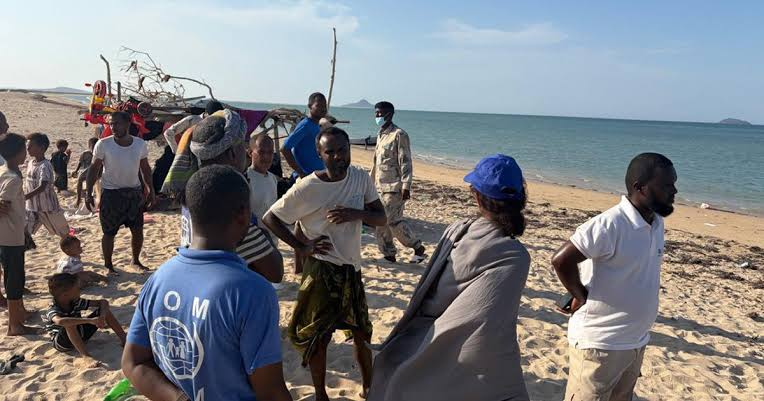
The International Organization for Migration said nearly 3,000 people have crossed by sea to Djibouti, while others have reached Somaliland and Puntland as families search for safety outside Yemen.
The latest displacement is concentrated around Yemen's Red Sea coast, where renewed fighting has intensified pressure on communities already affected by years of conflict, economic instability and damaged public infrastructure.
More Than 112,000 People Displaced Inside Yemen
The scale of the latest movement illustrates how quickly renewed fighting can create another humanitarian emergency.
At least 112,000 people have recently been displaced internally, according to the UN migration agency.
Internal displacement means these families remain inside Yemen but have been forced to leave their homes.
Many displaced people need immediate access to shelter, food, drinking water and medical care. Those requirements place additional pressure on communities and humanitarian organisations already operating with limited resources.
Thousands Are Fleeing Yemen by Sea
For some families, remaining elsewhere inside Yemen is no longer considered safe enough.
Nearly 3,000 people have travelled across the sea to Djibouti, according to the IOM figures reported Friday.
The journey across the Gulf of Aden can itself be dangerous.
People fleeing conflict may travel aboard overcrowded vessels with limited supplies while facing unpredictable weather and difficult maritime conditions.
Yet for families confronting violence at home, the risks of remaining can appear even greater.
Djibouti Is Preparing for More Arrivals
Djibouti is now preparing for the possibility that the number of arrivals could rise substantially.
Authorities and humanitarian organisations are making preparations for as many as 10,000 refugees, according to Reuters' report on the IOM assessment.
That would create additional pressure on a relatively small country already managing significant economic and social challenges.
New arrivals require more than temporary accommodation. They may need healthcare, food assistance, sanitation, education for children and longer-term protection if returning home remains impossible.
Yemen's Red Sea Coast Is Again a Major Flashpoint
The renewed displacement comes amid intensified fighting involving Houthi forces and opposing forces in Yemen and the wider region.
Recent attacks have also focused attention on Saudi energy infrastructure and strategically important maritime routes around the Red Sea and Gulf of Aden.
This gives Yemen's conflict significance beyond the country's borders.
The region sits alongside one of the world's most important maritime trade corridors, connecting shipping routes between Asia, Europe and the Mediterranean.
Why the Bab el-Mandeb Strait Matters
At the southwestern edge of Yemen lies the Bab el-Mandeb Strait, a narrow maritime passage connecting the Red Sea with the Gulf of Aden.
Commercial vessels travelling between the Indian Ocean and the Suez Canal commonly pass through this corridor.
That makes stability around Yemen important not only for the people living there but also for global shipping and international trade.
Escalating conflict near maritime routes can cause shipping companies to reassess security, change routes or face higher insurance and operating costs.
Yemen's Humanitarian Crisis Did Not Begin With This Fighting
The current displacement is occurring on top of a much older crisis.
Years of conflict have severely damaged Yemen's economy, healthcare system and essential infrastructure.
Families that are displaced today may already have experienced previous displacement, loss of income or prolonged shortages of basic services.
That cumulative impact makes every new escalation harder to absorb.
A household with savings, reliable employment and functioning public services has some ability to respond to an emergency. A family already living through years of instability may have almost no financial cushion remaining.
Children Face Particular Risks
Large-scale displacement can be especially disruptive for children.
Leaving home can interrupt education, separate families from support networks and make regular healthcare harder to access.
Temporary settlements and emergency accommodation may also lack the facilities necessary to support large numbers of children for extended periods.
The longer displacement continues, the greater the risk that what begins as an emergency develops into a long-term social problem.
The Crisis Could Put More Pressure on the Horn of Africa
People escaping Yemen do not disappear from the humanitarian system when they cross the sea.
Instead, the immediate burden moves partly towards countries on the opposite coast.
Djibouti sits in a strategically important but economically challenging region of the Horn of Africa. A sudden influx of thousands of people can increase demand for already limited housing, medical care, schools and public services.
That is why international humanitarian support can become critical when displacement crosses borders.
Yemen Is Also Connected to a Wider Regional Conflict
The humanitarian emergency is unfolding amid broader instability across the Middle East.
Oil markets have recently reacted sharply to attacks and fears of supply disruption. Brent crude remained above $100 a barrel on Friday as traders assessed damage to Saudi energy infrastructure and continuing regional tensions.
The human and economic consequences therefore increasingly overlap.
Conflict displaces civilians inside Yemen while simultaneously affecting shipping routes, energy infrastructure and international markets.
The Human Story Can Be Lost Behind Geopolitics
International coverage of Yemen frequently focuses on missiles, shipping lanes, oil infrastructure and regional alliances.
Those issues matter.
But the displacement figures reveal another dimension of the conflict.
Behind the number 112,000 are families leaving houses, neighbourhoods, jobs and schools without knowing when they will be able to return.
For people boarding boats towards Djibouti, the decision to cross dangerous waters is itself evidence of how severe conditions have become.
What Happens Next?
Much will depend on whether fighting along Yemen's Red Sea coast intensifies or begins to ease.
Further escalation could create additional internal displacement and push more people towards neighbouring countries.
Djibouti's preparations for potentially thousands more arrivals indicate that humanitarian organisations are not assuming the current movement has ended.
Aid agencies will also need to maintain assistance for people who remain displaced inside Yemen while simultaneously supporting those who have crossed international borders.
The immediate figures are already substantial: at least 112,000 displaced internally and nearly 3,000 crossing to Djibouti.
But the more important question is whether those numbers are approaching their peak — or merely documenting the beginning of another major displacement wave in one of the world's longest-running humanitarian crises.