
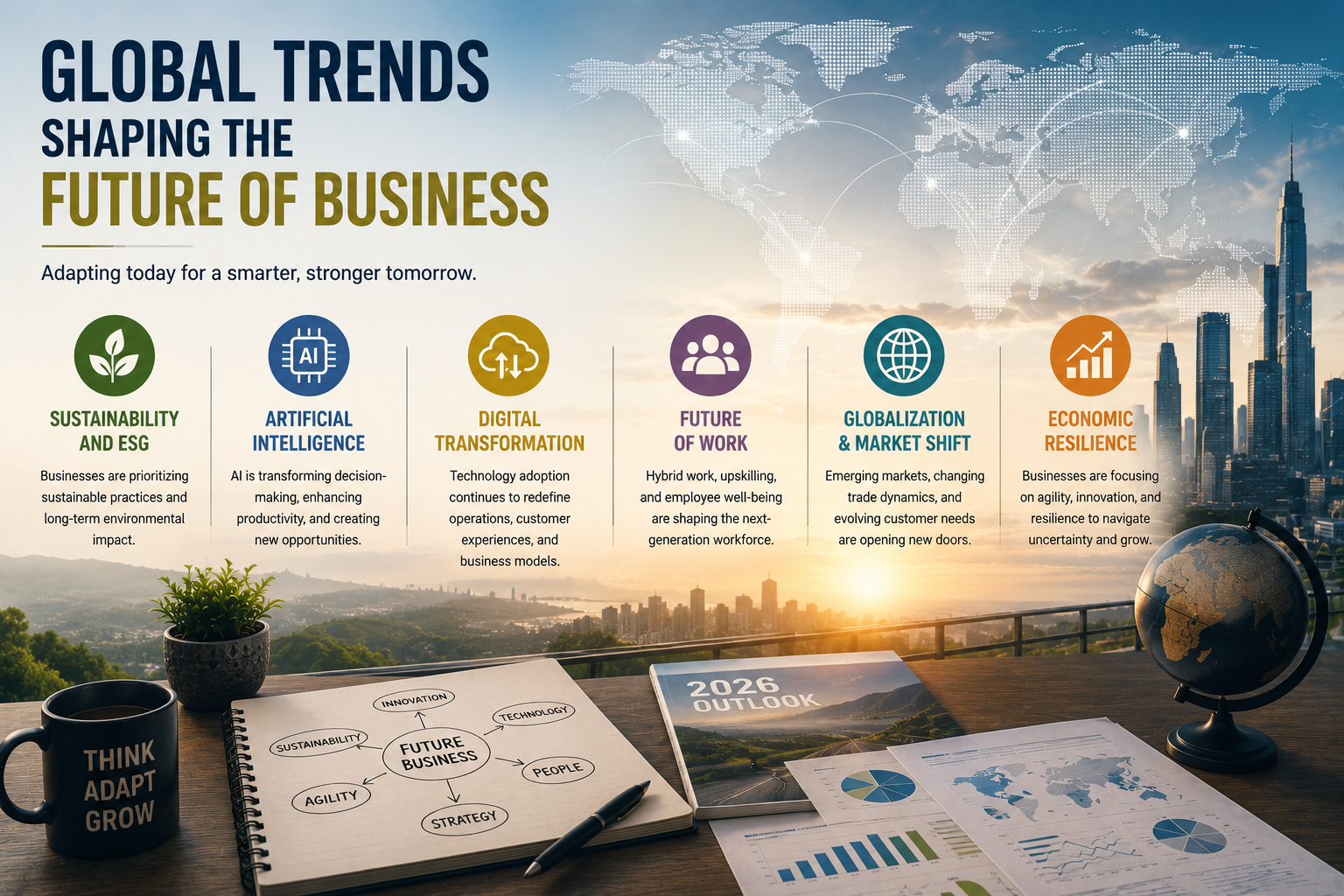
Discover the leading Global Trends shaping the future of business, including AI, digital transformation, sustainability, and changing consumer expectations.
Global Trends Shaping the Future of Business
The business world is evolving faster than ever as technology, economic shifts, and changing customer expectations redefine how companies operate. Organizations that understand emerging Global Trends can adapt more quickly, improve their competitiveness, and build long-term success. From artificial intelligence and sustainability to digital transformation and workforce changes, these developments are shaping the future of businesses across every industry.
Artificial Intelligence Becomes Essential
Artificial intelligence has moved beyond being an emerging technology and is now a core business tool. Companies use AI to automate repetitive tasks, improve customer service, analyze data, and support strategic decision-making.
As AI capabilities continue to expand, businesses that integrate intelligent technologies into their operations will gain greater efficiency and stronger competitive advantages.
Digital Transformation Accelerates
One of the most influential Global Trends is the continued growth of digital transformation. Businesses are adopting cloud computing, automation, digital collaboration tools, and advanced analytics to improve productivity and deliver better customer experiences.
Organizations that embrace digital technologies are often more agile and better prepared to respond to market changes.
Sustainability Becomes a Business Priority
Environmental responsibility has become an important factor in business strategy. Consumers, investors, and governments increasingly expect organizations to reduce emissions, minimize waste, and operate responsibly.
Businesses that invest in sustainable practices not only contribute to environmental protection but also strengthen their reputation and long-term resilience.
Hybrid and Flexible Work Models
The workplace continues to evolve as hybrid and remote work remain common across many industries. Flexible work arrangements help businesses attract skilled professionals, improve employee satisfaction, and increase productivity.
Companies are investing in secure digital collaboration platforms and communication technologies to support distributed teams effectively.
Data-Driven Decision Making
Modern businesses rely on data to guide strategic planning and daily operations. Real-time analytics allow organizations to understand customer behavior, forecast demand, optimize pricing, and improve operational efficiency.
Businesses that make data-driven decisions can respond more quickly to market opportunities and challenges.
Cybersecurity Gains Greater Importance
As organizations become increasingly digital, cybersecurity is a critical business priority. Protecting customer information, financial data, and business operations requires advanced security systems and ongoing employee awareness.
Investing in cybersecurity helps reduce risks while maintaining customer trust and regulatory compliance.
E-Commerce Continues to Expand
Online shopping and digital services continue to grow globally. Businesses are enhancing their websites, offering multiple payment methods, improving delivery options, and providing personalized shopping experiences.
The expansion of e-commerce enables companies to reach customers across international markets more efficiently than ever before.
Innovation Drives Competitive Advantage
Continuous innovation remains essential for business success. Companies that improve products, services, and internal processes are better positioned to meet changing customer expectations.
Innovation also encourages business growth by creating new revenue opportunities and increasing operational efficiency.
Workforce Development and Skills
Rapid technological advancement requires continuous learning. Businesses are investing in employee training, leadership development, and digital skills to prepare their workforce for future challenges.
Organizations that prioritize professional development often experience stronger employee engagement and higher productivity.
Global Collaboration and Expansion
Technology has made international collaboration more accessible than ever. Businesses can partner with organizations across different countries, access global talent, and expand into new markets using digital platforms.
This increased connectivity creates opportunities for innovation and sustainable business growth.
Customer Expectations Continue to Evolve
Today’s customers expect convenience, personalization, transparency, and exceptional service. Businesses that actively listen to customer feedback and adapt their offerings are more likely to build lasting relationships and maintain a competitive edge.
Meeting changing customer expectations is one of the most important Global Trends influencing long-term business success.
Conclusion
The Global Trends shaping the future of business highlight the importance of adaptability, innovation, and technology. Artificial intelligence, digital transformation, sustainability, cybersecurity, workforce development, and evolving customer expectations are redefining how organizations compete in today’s economy. Businesses that embrace these trends proactively will be better equipped to achieve sustainable growth, improve resilience, and succeed in an increasingly connected world.
FAQs
1. What are Global Trends in business?
Global Trends are major economic, technological, and social developments that influence how businesses operate and compete worldwide.
2. Why are Global Trends important for businesses?
They help organizations anticipate market changes, identify new opportunities, reduce risks, and make informed strategic decisions.
3. Which Global Trends are shaping business in 2026?
Artificial intelligence, digital transformation, sustainability, cybersecurity, hybrid work, e-commerce, and data-driven decision-making are among the most significant trends.
4. How can businesses adapt to Global Trends?
Businesses should invest in technology, train employees, monitor market developments, embrace innovation, and remain flexible in response to changing customer needs.
5. How do Global Trends affect business growth?
They influence customer behavior, operational efficiency, market opportunities, investment decisions, and overall competitiveness, making them essential for long-term success.
