
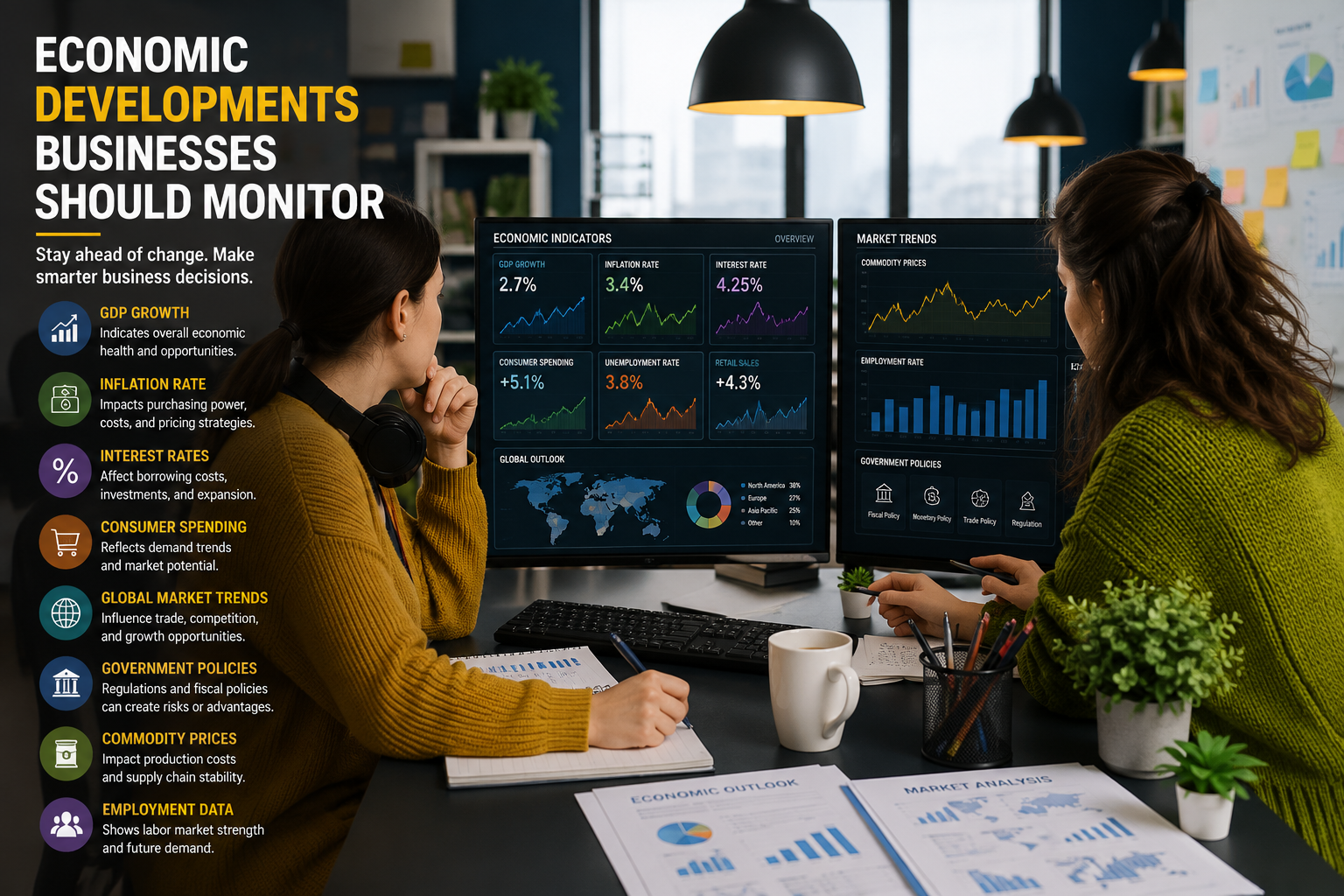
Learn which Economic Developments businesses should monitor to manage risks, identify opportunities, and make smarter strategic decisions.
Economic Developments Businesses Should Monitor
The global economy constantly changes due to shifts in government policies, consumer behavior, technological innovation, and international trade. These changes directly affect business operations, investment decisions, and long-term planning. Understanding important Economic Developments helps organizations reduce risks, identify opportunities, and adapt successfully to changing market conditions.
Regardless of industry or business size, monitoring the economy is essential for making informed strategic decisions.
Inflation Trends
Inflation measures the rate at which prices for goods and services increase over time. Rising inflation can increase production costs, transportation expenses, and employee wages while reducing consumers’ purchasing power.
Businesses that closely monitor inflation can adjust pricing strategies, manage expenses, and protect profit margins more effectively.
Interest Rate Changes
Interest rates influence borrowing costs for businesses and consumers. Higher interest rates often reduce spending and increase financing costs, while lower rates encourage investment and business expansion.
Companies planning major investments or seeking business loans should pay close attention to changing interest rate policies.
Gross Domestic Product (GDP)
Gross Domestic Product (GDP) measures the overall economic output of a country. Strong GDP growth generally reflects expanding business activity, increased consumer demand, and improved investment opportunities.
Declining GDP may signal slower economic conditions, encouraging businesses to adopt more cautious growth strategies.
Employment and Labor Market Conditions
Employment data provides valuable insights into workforce availability and consumer spending power. Strong employment typically supports higher consumer confidence and increased demand for products and services.
Businesses also monitor labor shortages, wage growth, and hiring trends when planning recruitment and expansion.
Consumer Spending Patterns
Consumer spending remains one of the most important Economic Developments affecting businesses. Changes in household spending directly influence retail sales, service demand, and overall business performance.
Understanding purchasing behavior allows businesses to forecast demand and optimize inventory management.
Global Trade and Supply Chains
International trade policies, shipping costs, and supply chain disruptions continue to shape business operations. Companies that rely on imported materials or global suppliers must monitor tariffs, transportation costs, and geopolitical developments.
Diversifying suppliers and strengthening supply chain resilience helps reduce operational risks.
Currency Exchange Rates
Businesses involved in international trade should monitor exchange rate fluctuations closely. Currency movements affect import costs, export pricing, and international competitiveness.
Effective financial planning helps organizations manage foreign exchange risks while maintaining stable profitability.
Energy and Commodity Prices
Changes in fuel, electricity, and raw material prices influence operating costs across many industries. Manufacturing, transportation, agriculture, and logistics businesses are particularly affected by commodity price movements.
Monitoring these costs helps businesses plan budgets and adjust pricing strategies when necessary.
Government Policies and Regulations
Tax reforms, labor laws, environmental regulations, and business incentives can significantly impact business operations. Staying informed about policy changes allows organizations to remain compliant while identifying potential financial benefits or operational challenges.
Businesses that anticipate regulatory changes are often better prepared for future market conditions.
Technological Investment Trends
Digital transformation continues to influence economic activity worldwide. Companies investing in automation, artificial intelligence, cloud computing, and cybersecurity often improve efficiency while strengthening their competitive position.
Technology investment has become one of the most significant Economic Developments influencing modern business growth.
Business and Consumer Confidence
Confidence levels provide valuable insights into future economic activity. When businesses and consumers feel optimistic, investment and spending generally increase. Lower confidence often leads to more cautious financial decisions.
Monitoring confidence indexes helps businesses anticipate market trends and prepare appropriate strategies.
Conclusion
Understanding key Economic Developments enables businesses to make better strategic decisions in an increasingly complex global economy. Inflation, interest rates, GDP, consumer spending, employment, trade, technology, and government policies all influence business performance and future growth opportunities. Organizations that regularly monitor these developments can respond more effectively to changing market conditions, reduce risks, and position themselves for sustainable long-term success.
FAQs
1. What are Economic Developments?
Economic Developments are changes in economic conditions that influence businesses, consumers, governments, and financial markets.
2. Why should businesses monitor Economic Developments?
Monitoring economic changes helps businesses make informed decisions, manage financial risks, forecast demand, and identify new growth opportunities.
3. Which Economic Developments have the biggest impact on businesses?
Inflation, interest rates, GDP growth, employment, consumer spending, exchange rates, and government policies are among the most influential factors.
4. How often should businesses review Economic Developments?
Businesses should monitor major economic reports monthly and quarterly while staying informed about significant policy changes and global events.
5. How do Economic Developments influence business strategy?
They affect pricing, investment decisions, hiring, expansion plans, budgeting, customer demand, and overall business competitiveness, making them essential for long-term planning.
