
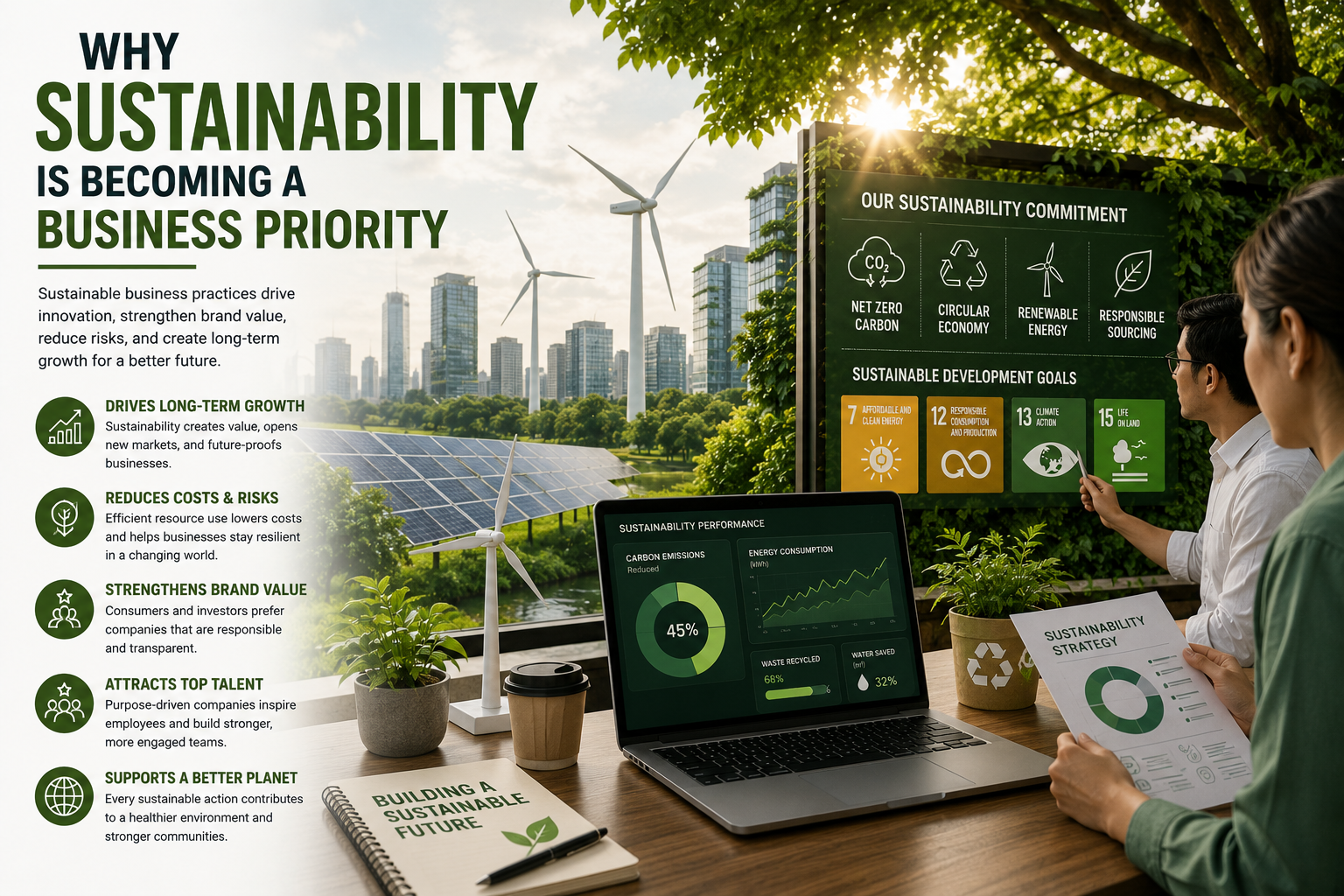
Discover how Sustainability Trends are influencing business strategy, customer trust, innovation, and long-term growth across industries.
Why Sustainability Is Becoming a Business Priority
Sustainability has evolved from a corporate initiative into a key business strategy. Around the world, organizations are recognizing that responsible environmental and social practices contribute not only to protecting the planet but also to improving long-term profitability and competitiveness. As Sustainability Trends continue to shape global markets, businesses are adapting their operations to meet the expectations of customers, investors, employees, and regulators.
Companies that embrace sustainability are better positioned to build resilience, strengthen their reputation, and create lasting value.
Growing Consumer Expectations
Modern consumers are increasingly aware of environmental and social issues. Many prefer to purchase products and services from companies that demonstrate responsible business practices.
Following Sustainability Trends helps businesses build customer trust, strengthen brand loyalty, and attract environmentally conscious buyers who value ethical business operations.
Stronger Brand Reputation
Businesses known for sustainable practices often enjoy a positive public image. Reducing waste, using environmentally friendly materials, and supporting local communities demonstrate a company’s commitment to responsible growth.
A strong reputation enhances customer confidence and can differentiate a business from its competitors.
Cost Savings Through Efficiency
Sustainability often leads to improved operational efficiency. Businesses reduce costs by minimizing waste, lowering energy consumption, optimizing transportation, and improving resource management.
Investments in energy-efficient equipment and smarter production processes frequently generate long-term financial savings.
Meeting Regulatory Requirements
Governments around the world continue to introduce regulations related to environmental protection, carbon emissions, waste management, and corporate reporting.
Businesses that stay ahead of these requirements reduce compliance risks and avoid costly penalties while preparing for future regulatory changes.
Attracting Investors
Investors increasingly evaluate environmental, social, and governance (ESG) performance when making investment decisions. Companies that align with current Sustainability Trends are often viewed as lower-risk and better prepared for long-term growth.
Strong sustainability practices can improve access to investment and financing opportunities.
Encouraging Innovation
Sustainability drives businesses to develop new products, improve manufacturing processes, and adopt cleaner technologies. Innovation inspired by sustainability creates opportunities for growth while addressing environmental challenges.
Companies that continuously innovate are more likely to remain competitive in changing markets.
Improving Employee Engagement
Employees increasingly want to work for organizations that reflect their values. Businesses that prioritize sustainability often experience higher employee satisfaction, stronger engagement, and improved talent retention.
A purpose-driven workplace can also attract skilled professionals seeking meaningful careers.
Strengthening Supply Chains
Sustainable supply chain management focuses on responsible sourcing, ethical labor practices, and efficient resource utilization. Businesses are working more closely with suppliers to reduce environmental impact and improve operational resilience.
Stronger supply chains help organizations manage risks and respond more effectively to global disruptions.
Supporting Long-Term Business Growth
Businesses that integrate sustainability into their long-term strategy are better prepared for evolving market demands. By balancing profitability with environmental and social responsibility, companies create sustainable value for customers, employees, investors, and communities.
This long-term perspective supports continued growth while reducing future business risks.
Leveraging Green Technology
Advancements in renewable energy, electric transportation, smart manufacturing, and digital monitoring systems help businesses improve sustainability while increasing operational efficiency.
Technology enables organizations to measure environmental performance and make data-driven improvements that support both profitability and responsible business practices.
Preparing for the Future
As Sustainability Trends continue to influence global markets, businesses should evaluate their operations, reduce environmental impact, invest in innovation, and promote responsible corporate practices. Organizations that act proactively today will be better positioned to compete in tomorrow’s economy.
Building sustainability into business strategy is no longer optional for many industries—it is becoming a key driver of long-term success.
Conclusion
Sustainability Trends are transforming how businesses operate by encouraging environmental responsibility, operational efficiency, innovation, and stronger stakeholder relationships. Companies that embrace sustainable practices can reduce costs, strengthen their reputation, attract investors, and meet evolving customer expectations. By making sustainability a core business priority, organizations can achieve long-term growth while contributing positively to society and the environment.
FAQs
1. What are Sustainability Trends?
Sustainability Trends are evolving business practices focused on environmental responsibility, social impact, and long-term economic sustainability.
2. Why are Sustainability Trends important for businesses?
They help businesses improve efficiency, build customer trust, reduce risks, attract investors, and remain competitive.
3. How does sustainability improve business performance?
Sustainability reduces operational costs, encourages innovation, strengthens brand reputation, and supports long-term growth.
4. What role does technology play in Sustainability Trends?
Technology helps businesses improve energy efficiency, reduce waste, monitor environmental performance, and implement sustainable solutions.
5. How can businesses adopt Sustainability Trends?
Businesses can reduce energy consumption, improve supply chain practices, invest in renewable technologies, minimize waste, support ethical sourcing, and integrate sustainability into their long-term business strategy.
