
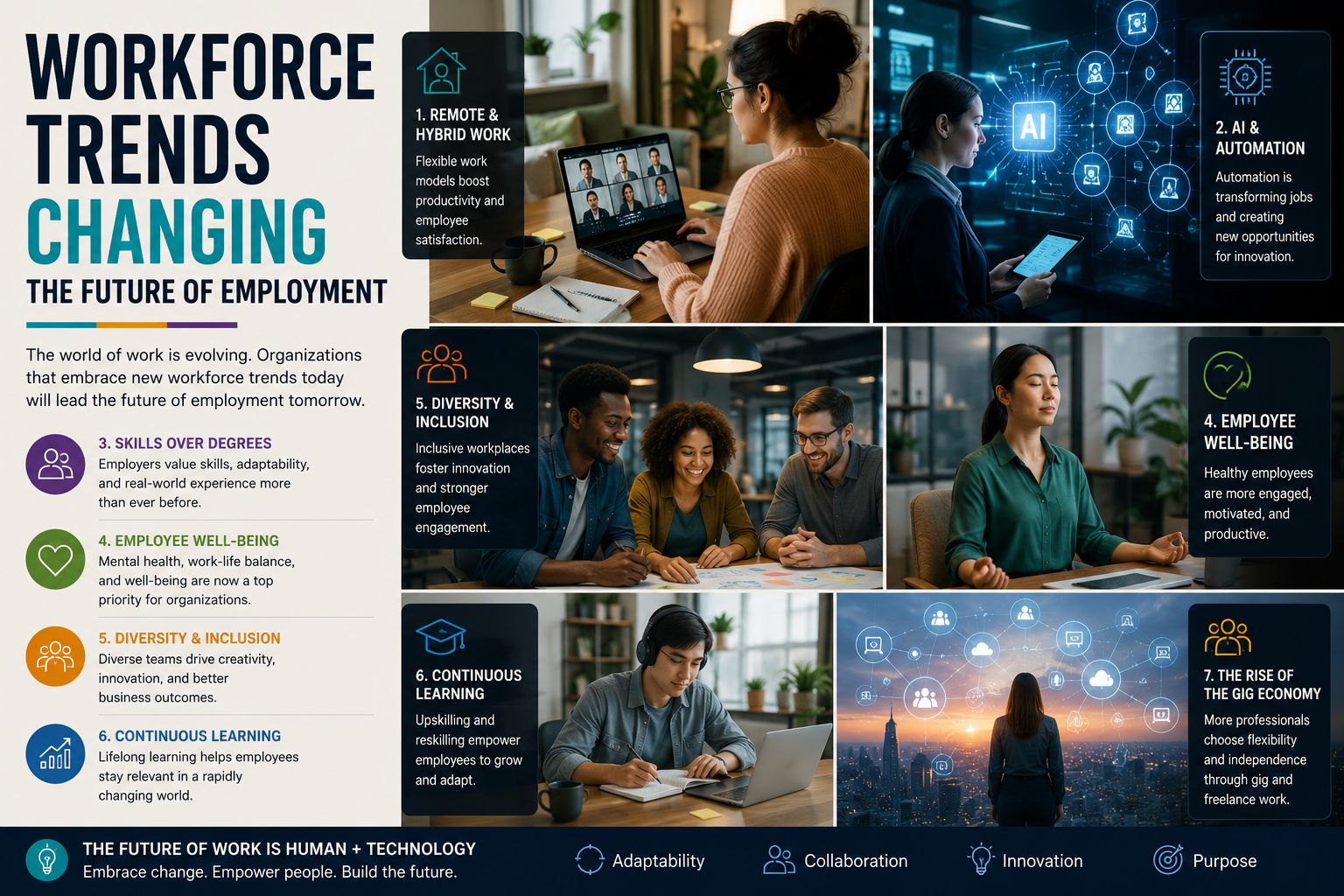
Explore the latest Workforce Trends shaping the future of employment, including remote work, AI, automation, upskilling, and flexible workplaces.
Workforce Trends Changing the Future of Employment
The workplace is evolving rapidly as technology, employee expectations, and global economic conditions reshape how organizations operate. Businesses are adapting to new ways of working while employees seek greater flexibility, career development, and meaningful work experiences. Understanding today’s Workforce Trends helps companies attract top talent, improve productivity, and prepare for the future of employment.
Organizations that embrace these changes are more likely to remain competitive in an increasingly dynamic labor market.
Hybrid and Remote Work Continue to Grow
One of the most significant Workforce Trends is the continued adoption of hybrid and remote work models. Many businesses now combine office-based and remote work to provide employees with greater flexibility while maintaining collaboration and productivity.
Flexible work arrangements help organizations attract skilled professionals, reduce overhead costs, and improve employee satisfaction.
Artificial Intelligence Supports Employees
Artificial intelligence is transforming workplaces by automating repetitive tasks, analyzing business data, and improving decision-making. Rather than replacing most employees, AI increasingly works alongside them to increase efficiency and productivity.
Businesses use AI for customer service, recruitment, project management, marketing, and administrative processes, allowing employees to focus on higher-value work.
Continuous Learning Becomes Essential
Rapid technological change requires employees to update their skills regularly. Businesses are investing in training programs, online learning platforms, professional certifications, and leadership development to prepare their workforce for future challenges.
Upskilling and reskilling have become essential strategies for maintaining a competitive workforce.
Greater Focus on Employee Well-Being
Employee well-being has become a major business priority. Companies recognize that physical health, mental wellness, and work-life balance directly influence productivity and job satisfaction.
Organizations are introducing wellness programs, flexible schedules, mental health resources, and supportive workplace cultures to improve employee retention.
Digital Skills Are in High Demand
As businesses continue their digital transformation, employees with expertise in data analysis, cybersecurity, artificial intelligence, cloud computing, software development, and digital marketing are increasingly valuable.
Developing digital skills helps both employees and businesses remain competitive in the modern economy.
Flexible Employment Models
Freelancing, contract work, consulting, and project-based employment continue to grow. Businesses benefit from accessing specialized talent when needed, while professionals enjoy greater career flexibility.
This shift allows organizations to scale teams efficiently while responding quickly to changing business needs.
Diversity and Inclusion Drive Innovation
Modern organizations recognize that diverse teams bring broader perspectives and stronger problem-solving abilities. Businesses are strengthening diversity, equity, and inclusion initiatives to create workplaces where employees feel respected and supported.
Inclusive work environments encourage innovation, collaboration, and long-term organizational success.
Technology Improves Collaboration
Cloud-based platforms, video conferencing, project management software, and digital communication tools enable teams to collaborate effectively regardless of location.
Technology has become an essential part of modern workforce management, supporting productivity across distributed teams.
Leadership Styles Continue to Evolve
Today’s leaders are expected to communicate openly, support employee development, encourage collaboration, and adapt to changing workplace expectations.
Successful leadership focuses on trust, empathy, transparency, and continuous improvement rather than traditional command-and-control management styles.
Automation Reshapes Job Roles
Automation continues to transform many industries by handling repetitive tasks more efficiently. While some routine roles change, new opportunities emerge in technology, data analysis, cybersecurity, digital services, and innovation.
Businesses that prepare employees for changing responsibilities can successfully adapt to evolving workforce demands.
Preparing for Future Workforce Trends
Organizations should continuously monitor Workforce Trends, invest in employee development, adopt new technologies responsibly, and create flexible workplace policies. Businesses that remain adaptable will be better prepared to attract skilled professionals and respond to future labor market changes.
Preparing today helps organizations build resilient teams capable of meeting tomorrow’s challenges.
Conclusion
Workforce Trends are redefining the future of employment through technological innovation, flexible work arrangements, continuous learning, and employee-centered workplace strategies. Businesses that embrace hybrid work, invest in digital skills, support employee well-being, and encourage innovation will be better positioned for long-term success. By adapting to these evolving workforce trends, organizations can build stronger teams and remain competitive in an ever-changing global economy.
FAQs
1. What are Workforce Trends?
Workforce Trends are changes in workplace practices, employee expectations, technology, and labor markets that influence how businesses manage their workforce.
2. Why are Workforce Trends important?
They help businesses prepare for changing employee needs, improve productivity, attract top talent, and remain competitive.
3. How is artificial intelligence affecting Workforce Trends?
AI automates routine tasks, supports decision-making, improves efficiency, and creates new opportunities for employees to focus on strategic and creative work.
4. Why is continuous learning important in today’s workforce?
Rapid technological advancements require employees to regularly update their skills to remain effective and competitive.
5. How can businesses adapt to Workforce Trends?
Businesses should invest in employee training, embrace flexible work models, adopt digital technologies, prioritize well-being, and foster an inclusive workplace culture.
