
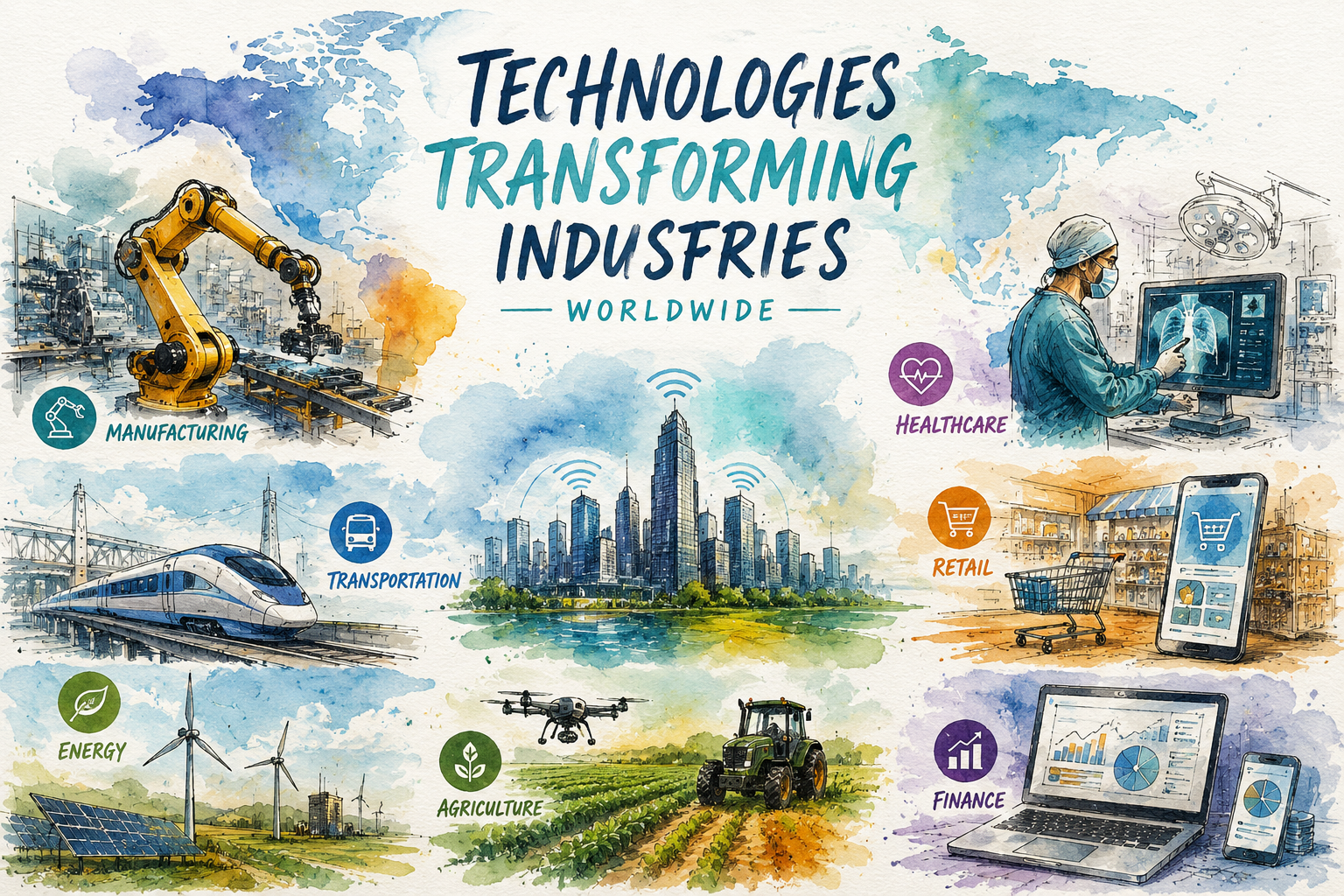
Discover how Emerging Technologies are transforming industries through AI, automation, blockchain, IoT, cloud computing, and digital innovation.
Technologies Transforming Industries Worldwide
Technology continues to reshape the global economy, changing how businesses operate, communicate, and deliver value to customers. Organizations across healthcare, manufacturing, finance, retail, agriculture, and logistics are adopting Emerging Technologies to improve efficiency, reduce costs, and create innovative products and services. Companies that embrace these advancements are better positioned to remain competitive in today’s rapidly evolving marketplace.
Artificial Intelligence Improves Decision-Making
Artificial intelligence (AI) is one of the most influential Emerging Technologies transforming industries worldwide. AI systems analyze large amounts of data, automate repetitive tasks, and provide valuable insights that support better business decisions.
Businesses use AI to improve customer service, personalize marketing campaigns, detect fraud, forecast demand, and optimize operations across multiple departments.
Automation Boosts Productivity
Automation enables organizations to complete routine processes faster and with greater accuracy. Manufacturing companies use automated production lines, while service businesses automate customer support, invoicing, scheduling, and administrative tasks.
Reducing manual work allows employees to focus on strategic activities that contribute to innovation and business growth.
Cloud Computing Enhances Flexibility
Cloud computing provides businesses with secure access to applications, storage, and computing resources over the internet. Companies can collaborate more effectively, reduce infrastructure costs, and scale operations without investing heavily in physical servers.
Cloud-based solutions have become essential for businesses operating across multiple locations and supporting remote work.
Internet of Things Connects Smart Devices
The Internet of Things (IoT) connects machines, equipment, vehicles, and sensors through the internet, allowing them to collect and exchange real-time information.
Industries such as healthcare, agriculture, logistics, and manufacturing use IoT technology to monitor equipment performance, improve efficiency, reduce downtime, and optimize resource management.
Blockchain Strengthens Transparency
Blockchain technology creates secure and transparent digital records that cannot easily be altered. Beyond cryptocurrency, blockchain supports supply chain management, financial transactions, healthcare records, digital identity verification, and contract management.
Businesses benefit from improved security, greater transparency, and increased trust between organizations and customers.
Robotics Modernizes Manufacturing
Modern robotics improves productivity by performing repetitive, dangerous, and highly precise tasks. Manufacturing facilities increasingly rely on robots to improve production quality, reduce workplace injuries, and increase operational efficiency.
Robotics is also expanding into healthcare, warehousing, hospitality, agriculture, and logistics.
5G Accelerates Digital Innovation
High-speed 5G networks support faster communication between connected devices while reducing network delays. This technology enables smart factories, autonomous vehicles, telemedicine, and advanced IoT applications.
Improved connectivity helps businesses operate more efficiently while supporting future technological advancements.
Cybersecurity Protects Digital Businesses
As digital transformation accelerates, cybersecurity becomes increasingly important. Advanced security technologies powered by artificial intelligence help organizations detect cyber threats, monitor suspicious activity, and respond to attacks more quickly.
Strong cybersecurity protects customer information, financial data, and business operations from evolving digital risks.
Extended Reality Enhances Experiences
Virtual reality (VR), augmented reality (AR), and mixed reality (MR) are creating new opportunities for training, education, retail, healthcare, and entertainment.
Businesses use these technologies to demonstrate products, train employees, improve customer engagement, and create immersive digital experiences.
Green Technology Supports Sustainable Growth
Environmental innovation has become an important part of modern business strategy. Renewable energy systems, energy-efficient manufacturing, electric vehicles, and smart environmental monitoring help organizations reduce emissions while improving long-term operational efficiency.
Sustainable innovation strengthens both environmental responsibility and business competitiveness.
Preparing for Future Innovation
Businesses that continuously invest in learning, employee development, and digital transformation are better prepared to benefit from future technological advances. Monitoring market trends and adopting relevant solutions ensures organizations remain competitive in an increasingly technology-driven economy.
Implementing Emerging Technologies strategically allows businesses to improve efficiency while creating new opportunities for long-term growth.
Conclusion
Emerging Technologies are transforming industries worldwide by improving productivity, strengthening security, enhancing connectivity, and driving innovation. Artificial intelligence, automation, cloud computing, IoT, blockchain, robotics, and green technology continue to reshape how organizations compete in the global marketplace. Businesses that embrace these advancements today will be better equipped to adapt, innovate, and succeed in the digital economy of the future.
FAQs
1. What are Emerging Technologies?
Emerging Technologies are innovative technologies that are rapidly evolving and transforming industries through improved efficiency, automation, and digital capabilities.
2. Why are Emerging Technologies important for businesses?
They help organizations improve productivity, reduce operational costs, enhance customer experiences, and remain competitive in changing markets.
3. Which industries benefit the most from Emerging Technologies?
Healthcare, manufacturing, finance, retail, agriculture, logistics, education, and transportation all benefit significantly from technological innovation.
4. How does artificial intelligence support business growth?
AI automates repetitive tasks, analyzes business data, improves customer service, enhances decision-making, and increases operational efficiency.
5. How can businesses prepare for Emerging Technologies?
Businesses should invest in digital transformation, train employees, strengthen cybersecurity, monitor industry trends, and adopt technology solutions that align with their long-term business goals.
